UAE-Saudi rail and power pact: what corridor works will need
The UAE and Saudi Arabia signed a rail and power-link MoU on 8 October. Where Gulf rail stands now, and the plant that desert rail and grid corridors use.
By Sufian8 min read
On 8 October in Riyadh, the UAE and Saudi Arabia signed a memorandum of understanding to work towards linking their rail networks and their power grids. It is a preliminary agreement. It commits both sides to studies and general principles, and no route, budget or timeline has been published. For equipment suppliers, it does not create a tender this year. It does signal clearly where long-term Gulf demand is heading, and it comes at a time when rail corridors across the UAE and Oman are already using large numbers of graders, rollers, earthmovers and cranes.
What was signed on 8 October
The MoU was signed by Mohamed Hassan Alsuwaidi, the UAE Minister of Investment, and Prince Abdulaziz bin Salman, Saudi Arabia's Minister of Energy, according to WAM as reported by The National on 8 October. It has two parts.
On rail, it sets out a framework for a cross-border link focused on freight and goods, with technical and economic studies on logistics integration and supply efficiency, and steps to make cross-border trade and transport easier. Both sides will study the feasibility of connecting their networks.
On power, it covers grid interconnection and the exchange and sale of electricity, with technical, economic and environmental feasibility studies. The two countries will coordinate with other GCC states on expanding the wider Gulf grid.
That is the full scope. Anyone selling "UAE-Saudi rail contracts" off the back of this MoU is ahead of the facts. The next real milestones are the launch of the feasibility studies and the naming of the bodies that will deliver them. The physical connection point on the UAE side already exists: Etihad Rail's freight line runs to Al Ghuwaifat on the Saudi border. In early March, Gulf News and MEED reported that Etihad Rail ran a passenger train from Al Ghuwaifat to Al Faya in Abu Dhabi, bringing more than 350 people into the country while regional airspace was disrupted. The track to the border is there. The open question is what gets built on the Saudi side to meet it.
Where Gulf rail actually stands
The work that is already under way is a better guide to near-term plant demand than the MoU.
| Project | Scope | Status | Source |
|---|---|---|---|
| Etihad Rail passenger services | Runs on the 900 km national network from Al Ghuwaifat to Fujairah | Abu Dhabi-Fujairah opened 30 June; Dubai-Abu Dhabi opened 30 September | Gulf News, 1 October |
| Etihad Rail new stations | Madinat Zayed, Liwa; then Al Mirfa, Al Dhannah, Al Sila | Due 30 November and 30 December 2026 | Gulf News, 1 October |
| Abu Dhabi-Dubai high-speed rail, phase 1 | About 150 km, Al Zahiyah to Al Jaddaf, 350 km/h design speed | Design-and-build contracts awarded early 2026; completion targeted for 2031 | MEED; AGBI, August |
| Hafeet Rail (UAE-Oman) | 238 km, Sohar to the UAE network via Buraimi and Al Ain | About 40% complete in April; track installation started; trials targeted for Q4 2027 | Oman Observer, 6 June; Muscat Daily, 16 September |
Two of these are large civil jobs right now. The high-speed line was split between two consortia, according to MEED: National Projects Construction, Trojan Tunnelling, Kalyon and China State Construction Engineering Corporation on the Abu Dhabi side, and Larsen & Toubro, China Harbour Engineering Company and Wade Adams on the Dubai side. Hafeet Rail has published some of the clearest quantities in the region. The Oman Observer reported on 6 June about 27 million cubic metres of excavation and backfill, over 100,000 cubic metres of concrete, 60 bridges up to 34 metres high, and about 2.5 km of tunnels. Oman ratified the bilateral railway agreement by Royal Decree 75/2026, which took effect on 3 September, Gulf News reported.
What a desert rail corridor uses
A conventional heavy-haul line like Etihad Rail's is mostly an earthworks job with structures added. The formation has to be built to tight level and density tolerances over hundreds of kilometres, often through dune sand that will not stay where it is put.
| Stage | Typical plant | Notes |
|---|---|---|
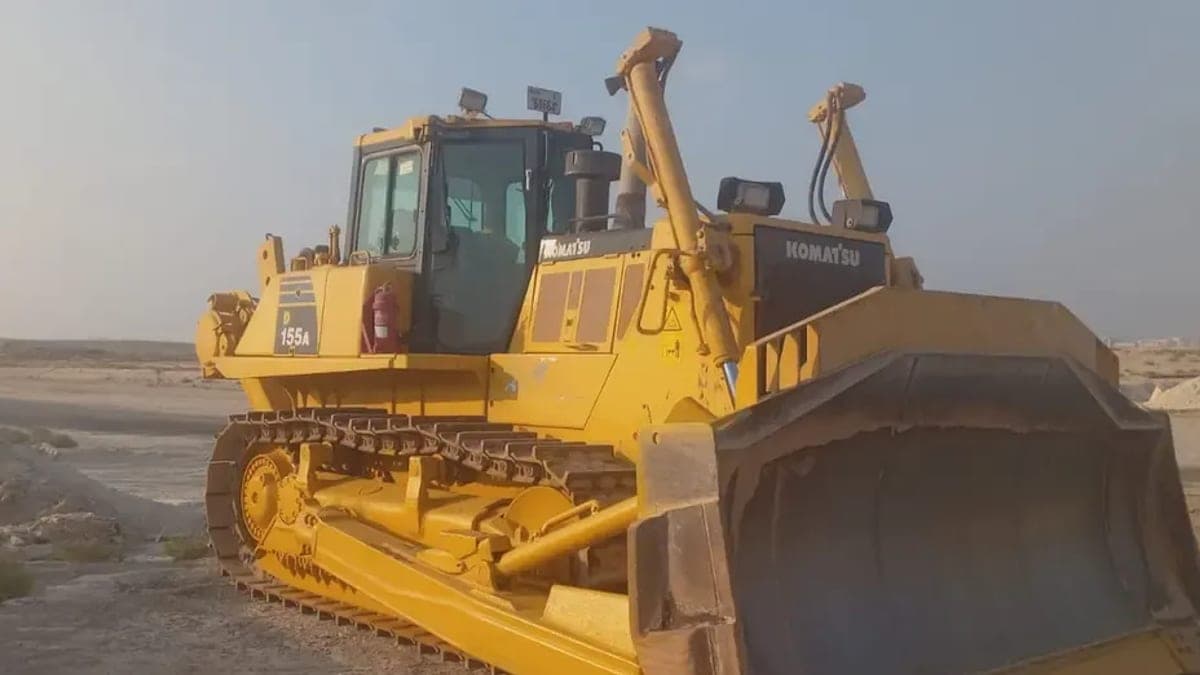
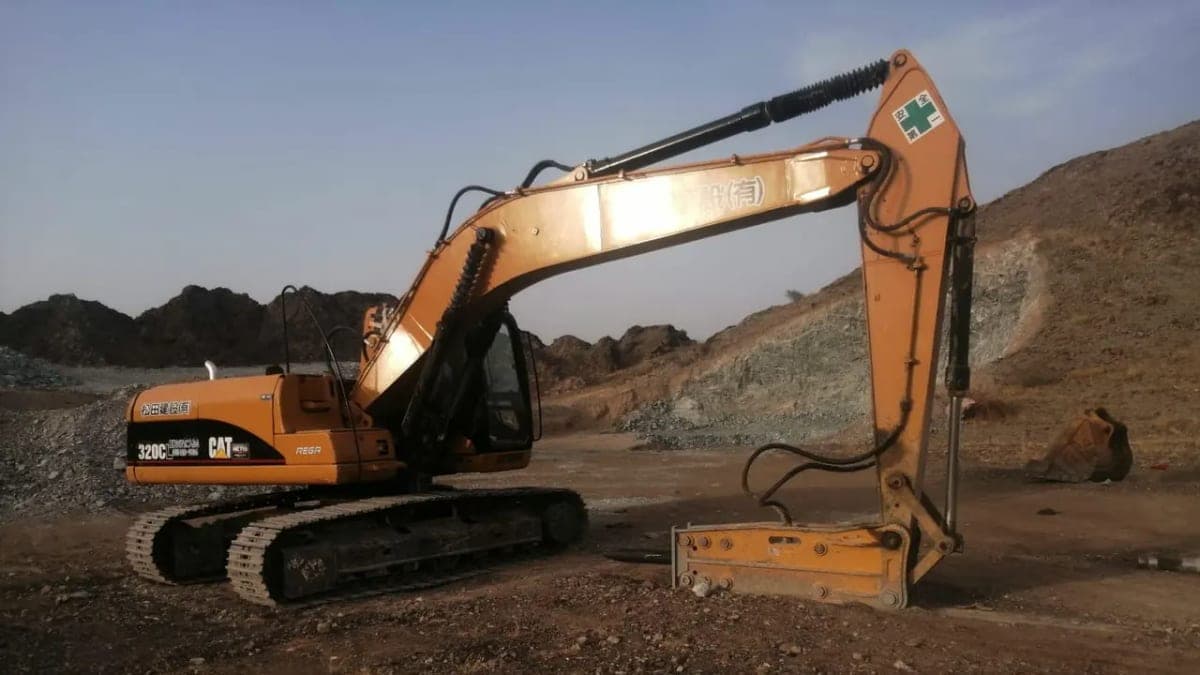
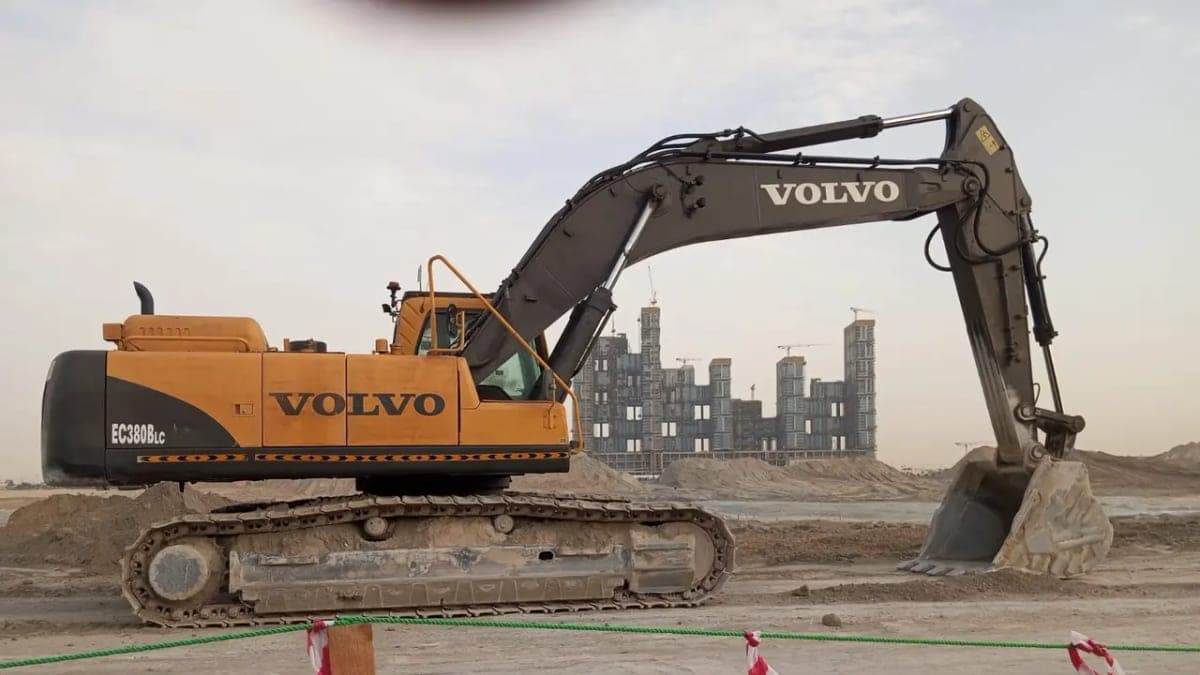
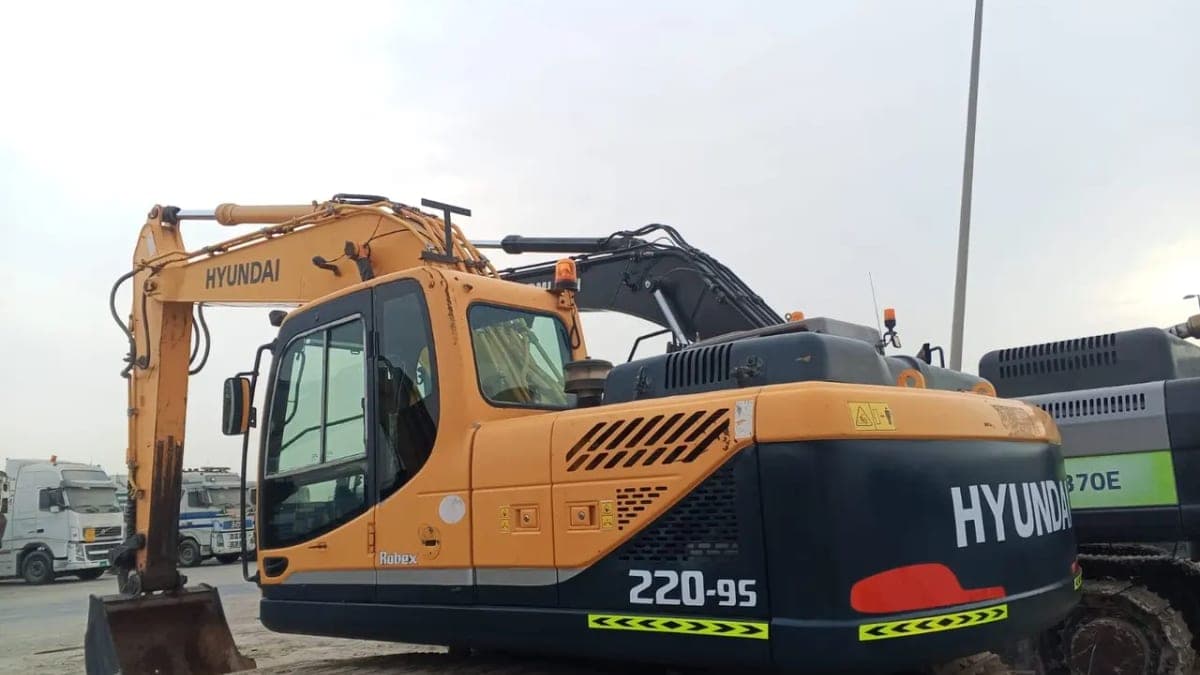
| Clearance and dune work | Dozers in the D8 to D9 class, 40-50 t excavators | Sand stabilisation and windbreaks on exposed sections |
| Bulk earthworks | Excavators loading articulated dump trucks (Volvo A40, Cat 745 class), wheel loaders | Long haul distances in open desert favour ADTs over road tippers |
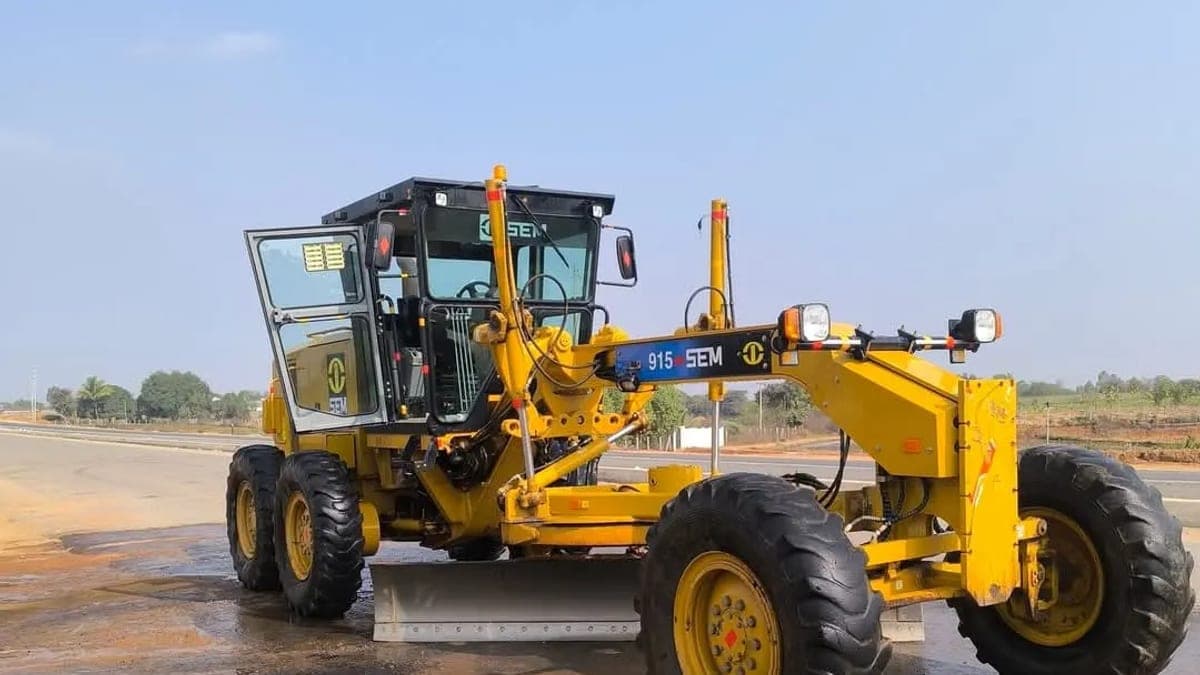
| Formation and sub-ballast | Motor graders (Cat 140 to 16M class), 12-20 t single-drum vibratory rollers, water tankers | Moisture control in sand is as important as compaction effort |
| Ballast supply | Quarry crushers, wheel loaders, road tippers and ballast wagons | Most UAE crushed rock comes from Fujairah and Ras Al Khaimah quarries |
| Track laying and tamping | Track-laying machines, tampers, ballast regulators | Specialist, owned by track contractors, rarely in the open hire market |
| Bridges and viaducts | Piling rigs, 100-250 t mobile and crawler cranes, concrete pumps | Heavier lifting on high-speed viaducts |
Graders and rollers decide the pace. One grader and a pair of rollers can only finish so many metres of formation a day to a rail specification, and when three corridor jobs overlap, those are the machines that run short first. Water is the other constraint. Dune sand only compacts properly near its optimum moisture content, so tankers and bowsers make up a large share of the fleet on any desert formation job, and a roller waiting for water is a roller doing nothing.
Track machinery is a separate market. Tampers and track-laying trains come from a small number of manufacturers and are operated by the track contractor's own crews. Most Gulf rental fleets will not compete there. Their opportunity is in the earthworks and structures, which is most of the equipment-hours.
The high-speed line is different again. A 350 km/h alignment between two cities means long viaducts and tunnels, not just embankment. That shifts demand towards piling rigs, heavy cranes, launching gantries and concrete supply, and away from graders.
The power link side
Grid interconnection uses less plant than rail but more specialist plant. Overhead transmission lines need tower foundations dug by excavators or augers, concrete delivered to remote tower sites, and tower steel erected by mobile cranes, usually in the 50 to 100 tonne range, along with conductor stringing equipment (pullers and tensioners). Access tracks to each tower are graded and compacted first. Any UAE-Saudi line would cross the same western Al Dhafra desert as the rail. If both go ahead, sharing corridors, camps and access roads would make obvious sense, though the MoU does not say this.
What it means for Gulf equipment suppliers
The near-term business is in the UAE and Oman, not across the Saudi border. High-speed rail civil works, Hafeet Rail's remaining structures and track, and the Etihad Rail station programme in Al Dhafra are creating demand today. The Saudi link is a longer-term opportunity that will take years to reach the tender stage, and suppliers should plan for it on that timescale.
Corridor work rewards a specific kind of supplier. Sites in Al Dhafra or near Al Ghuwaifat are hours from a workshop, so the owner who can keep a field mechanic, filters and tyres near the work will win repeat monthly hires. Machines need proper dust filtration and cooling for summer desert work. Operators who have trimmed formation to rail tolerance are worth more than operators who have not, and main contractors know the difference.
For firms in Abu Dhabi, the practical move is to make sure graders, rollers and water tankers are ready for long-term, remote placements. Compare motor grader hire and road roller availability against what corridor contractors are asking for, and check what is already available in the emirate through Abu Dhabi equipment rental.
Our advice: do not plan fleet purchases around the 8 October MoU. Plan them around the high-speed rail and Hafeet programmes that are already funded. Keep an eye out for the first feasibility tender on the Saudi link. Once a route study is commissioned, the alignment, the length of new track on the Saudi side, and the likely start year will become clear, and that is the point to start planning for cross-border work.
Sources
- The National: UAE and Saudi Arabia sign rail and energy agreement to boost cross-border trade and connectivity (8 October 2026)
- Al Arabiya: Saudi Arabia, UAE sign MoU to boost power grid interconnection, rail connectivity (8 October 2026)
- Gulf News: Etihad Rail stations in UAE, which are open and when the rest will launch (1 October 2026)
- Gulf News: Etihad Rail runs cross-border passenger service to boost readiness (March 2026)
- MEED: Etihad Rail conducts passenger rail trial run in Abu Dhabi (March 2026)
- MEED: Etihad Rail awards multibillion-dollar high-speed rail contracts
- AGBI: Abu Dhabi-Dubai high-speed rail service to start in 2031 (August 2026)
- Oman Observer: Track installation commences on Hafeet Rail project (6 June 2026)
- Muscat Daily: Oman-UAE rail link targets 2027 trials (16 September 2026)
- Gulf News: Oman ratifies UAE railway agreement as $2.5bn Hafeet Rail project advances