Saudi Equipment Demand in 2026: What Is Actually Being Built
NEOM was cut back, Riyadh took over. Where Saudi construction work is in 2026, which machines it needs, and the SASO rules UAE owners must meet to move in.
By Sufian9 min read
Saudi construction in 2026 is busier than the headlines about NEOM suggest, but the work has moved. Contract awards reached about $20 billion in the first half of the year, up from $15 billion a year earlier, according to MEED (7 September 2026), even with the Gulf conflict that began in February. The money is going into fixed-deadline programmes in Riyadh, Jeddah and the Eastern Province: Expo 2030, the 2034 FIFA World Cup stadiums, the King Salman International Airport, housing and rail. For a UAE contractor or rental company eyeing the Kingdom, the opportunity is real, but it sits behind a paperwork gate. Under Saudi import rules a heavy machine more than 15 years old cannot come in at all, and operators need a Saudi licence.
What was scaled back, and what that means for machines
The giga-project era is over in its original form. Semafor reported on 22 May 2026, citing people familiar with the matter, that NEOM had delayed further work on The Line until at least after 2030, that Trojena would receive no new investment until then, and that some Red Sea coast tourism plans were also pushed beyond 2030. The 2030 population target for NEOM was reported at up to 100,000 residents, down from 1.5 million in the original plan. The Asian Winter Games planned for Trojena in 2029 were postponed (Euronews, January 2026), and the Mukaab in Riyadh was put on hold. NEOM told AGBI in July 2026 that changes to its website should not be read as a change in its long-term vision, and most of the detail on the cutbacks comes from unnamed sources, so treat individual figures with care.
What survived matters more to equipment owners. Semafor reported that NEOM still plans to spend about $3 billion on OXAGON, the industrial city with a Red Sea port, and that the Public Investment Fund (PIF) is shifting money towards ports and data centres. MEED adds that PIF's 2026–30 strategy, approved in April, leans on private-sector funding and delivery.
For machines, this is a geographic shift as much as a financial one. Fleets that were mobilised to remote sites in Tabuk province now compete for work in and around Riyadh, where transport distances from the UAE are shorter and where most of the new packages are being let.
What is actually being built
The table below lists programmes where we could verify status from published reporting. Values are those reported by the named sources. Where a value was not disclosed, we say so.
| Programme | Verified status | Equipment it pulls |
|---|---|---|
| Expo 2030 Riyadh | Main utilities and civil works awarded to Nesma & Partners in January 2026 (MEED estimated SR1bn; value not disclosed). Second infrastructure package to Al Yamama in April 2026, value undisclosed. Expressions of interest for early works and substructure, including the Icon and the convention centre, submitted 23 July 2026 (MEED) | Excavators, graders, compactors, pipe-laying and utility trenching, then piling rigs |
| World Cup 2034 stadiums | King Salman Stadium, about 92,000 seats, early-works prequalification in April 2026, completion targeted for 2029. Jeddah Central stadium (CRCC with Sama, about SR6.7bn), Aramco's Dammam stadium (Besix with Albawani, about SR3.7bn) and Qiddiya's Prince Mohammed bin Salman Stadium (FCC with Nesma & Partners) already let (MEED, August 2025). The bid book plans 11 new stadiums | Crawler cranes, piling rigs, tower cranes, concrete pumps, large mobile cranes for roof steel |
| King Salman International Airport | A $3 billion runway extension ranked among the largest awards of the first half of 2026, according to Scavo data reported by AGBI (September 2026) | Large earthmoving spreads, dozers, graders, rollers, asphalt and concrete paving |
| Riyadh Rail Link (Saudi Landbridge) | 35km double-track line connecting the North-South Railway to the Eastern Railway. Four bidders, award described as imminent (MEED, 31 August 2026). SAR puts the wider Landbridge at about SR100bn, to be delivered by 2034 | Earthworks fleets, viaduct cranes, piling, rail-specific plant |
| Housing | Cumulative Sakani housing contracts reached 1,046,890 by end-June 2026. Homeownership was 66.24 per cent at the end of 2025 against a 70 per cent Vision 2030 target (Ministry of Municipalities and Housing figures, as reported by Sabq) | Backhoe loaders, mid-size excavators, telehandlers, forklifts, 50 to 80-ton mobile cranes |
MEED also counts more than $400 billion in the Saudi construction pipeline, with about $65 billion at bidding stage, and roughly 200 public-private partnership projects in preparation. A pipeline is not a site, but the bidding figure is a fair indicator of what mobilises in 2027.
Which machines are in demand
Read the table and three clusters stand out.
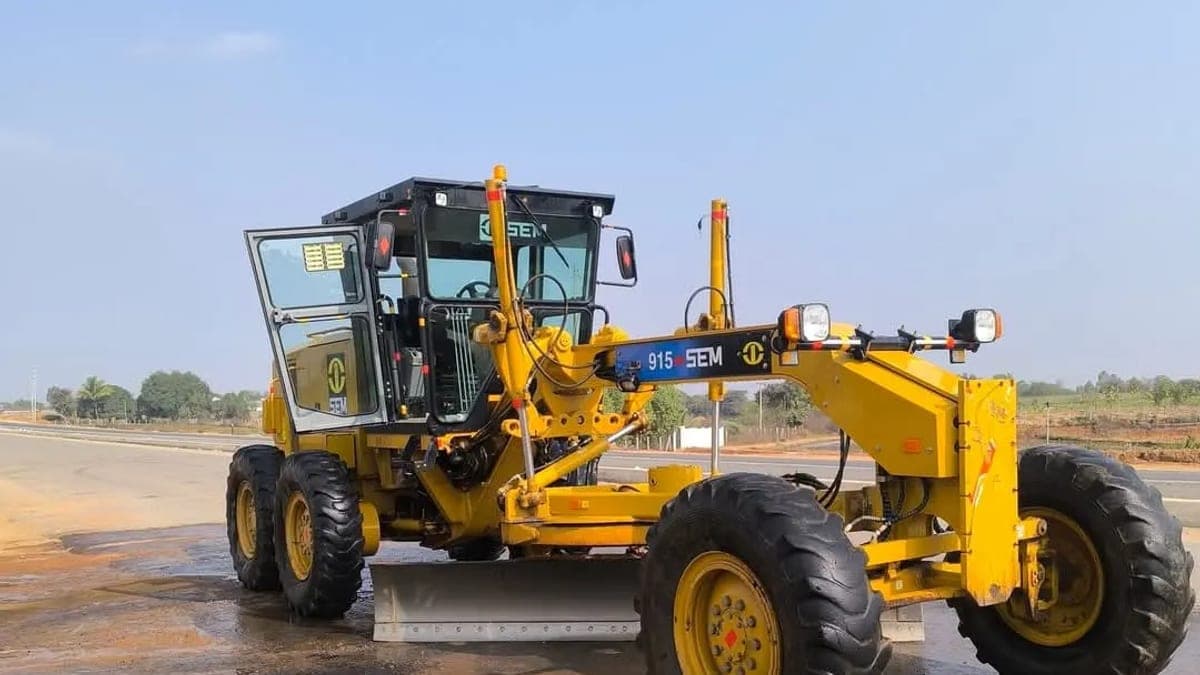
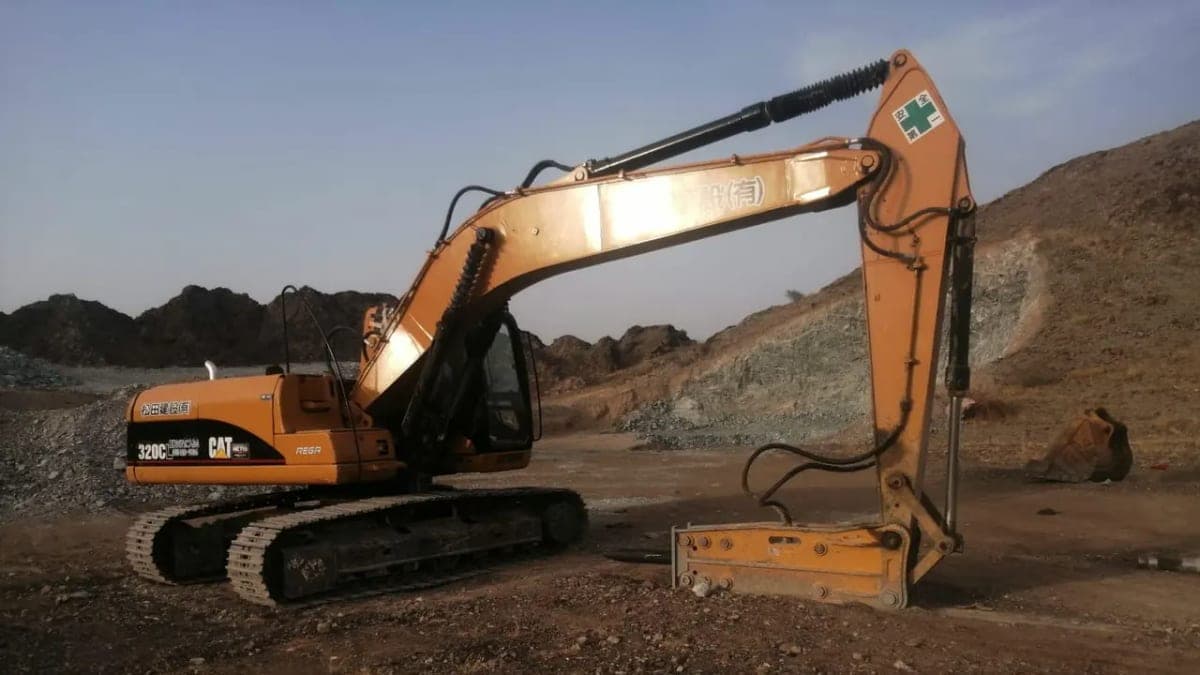
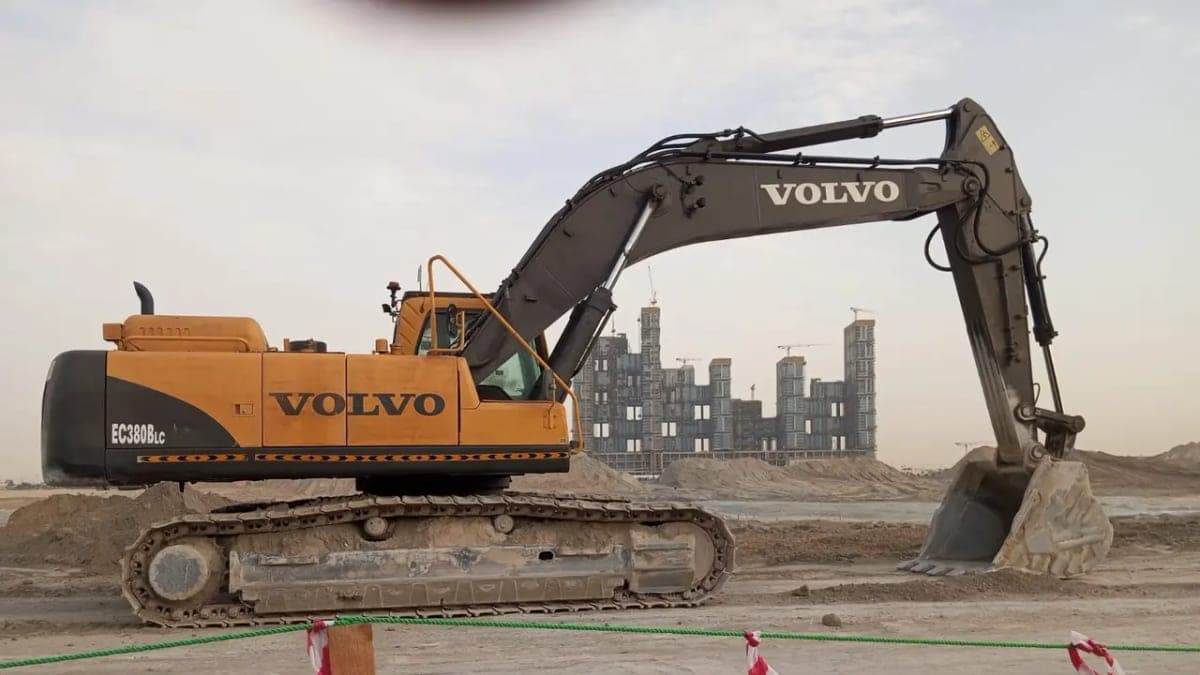
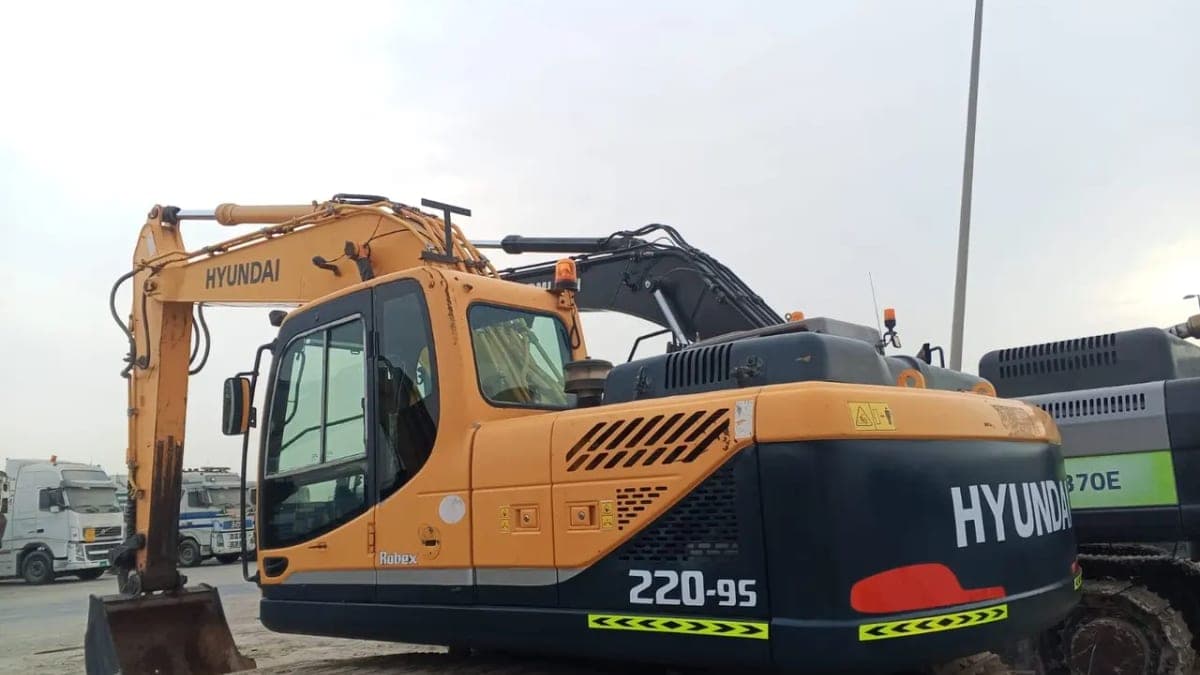
Earthmoving and utilities. Expo infrastructure, the airport runway and the Riyadh Rail Link all start in the ground. This is volume work for 20 to 50-ton excavators, CAT 966 and 980-class wheel loaders, motor graders, padfoot and smooth-drum rollers, and tipper fleets. It is also the work where a UAE owner with a well-maintained fleet of five to ten-year-old machines can compete, because clients care about availability and uptime more than about the latest model year.
Heavy lifting and piling. Stadiums, the Expo's landmark buildings and the airport's terminals need crawler cranes, large all-terrain cranes and piling rigs, often for long periods. This is a smaller, higher-value market where the Saudi certification rules described below bite hardest, because the cranes and their operators are inspected most closely.
Compact and mid-size machines for housing. Housing programmes keep backhoes, skid steers, telehandlers and mid-size cranes busy across many sites at once.
A word on market-size figures, because they get quoted in pitch decks. Research firms disagree wildly. P&S Intelligence puts the Saudi construction equipment market at about $1.27 billion in 2025. Mordor Intelligence says $1.78 billion, IMARC about $2.40 billion, and Nexdigm $6.42 billion. A fivefold spread tells you they are measuring different things. Do not plan a fleet move on any of them. Plan it on the packages above and the tenders you can actually bid.
Moving UAE machines into Saudi Arabia: what we could verify
The regulator. Saudi Arabia's Council of Ministers set up the Heavy Equipment Regulatory Center inside the Saudi Standards, Metrology and Quality Organization (SASO) by Decision No. 488 in April 2021. According to SASO, the centre's remit includes a national heavy equipment database, licensing of equipment and its operation, supervision of pre-operation inspections, accreditation of inspection bodies and operator training institutes, and rules on equipment service life.
Import requirements. The rules on importing heavy equipment were published in the official gazette Umm Al-Qura (issue 5026, 29 March 2024), as reproduced by the legal database Qanoniah. The main points:
- A valid certificate of conformity, issued through SASO's SABER platform by an accepted conformity assessment body, is required before import.
- The model may not be more than 15 years old, counted from the year of manufacture and excluding the current year.
- Mobile equipment that will run on public roads also needs a customs card.
- Chassis and serial numbers must match the documents. Equipment that has been flooded, burned, overturned or structurally damaged, and machines converted from right-hand to left-hand drive, are prohibited.
- Equipment from a Gulf country needs an export certificate as proof of ownership, and importers must hold a commercial registration in the heavy equipment field.
Operators. The Rules for Qualification and Licensing of Heavy Equipment Operators, from the same gazette issue, require operators to be between 18 and 60, medically fit, trained through approved programmes and to pass the centre's exam. The licence lasts three years. We found nothing in the published rules that automatically recognises a UAE operator card, so budget time and money for testing. Saudi Aramco sites run their own heavy equipment certification on top of this, and crane operator job postings for Aramco work routinely ask for a TÜV certificate as well.
Temporary entry. Saudi Arabia began accepting ATA Carnets from 1 June 2024 (EY), but the scheme is built for exhibitions and events, allows up to six months and carries a penalty of SR 1,000 per week for late re-export. It is not a route for working machines on a construction contract.
Transport. Abnormal loads need exceptional-load permits from the Roads General Authority, applied for online in advance. Ajel reported on 16 April 2026 that the authority issued more than 15,000 exceptional-load permits for roads outside cities in the first quarter of 2026 alone, that moving heavy equipment is one of the main reasons for them, and that such loads may only travel at specified times, with weather, night travel and public holidays all treated as risk factors. Price that waiting time into mobilisation.
Before you quote a Saudi package
Run your fleet list against the year-of-manufacture rule first. A 2009 machine sitting in a Sharjah yard is simply not eligible, however good its condition. Start SABER certification for the units that qualify, put operators through Saudi licensing early, and price mobilisation with permits and restricted travel windows built in. Then aim at Riyadh first: Expo infrastructure and the rail link are where earthmoving fleets will be needed in 2027. If you want to test demand before committing machines, list them on the Saudi rental site, check used equipment prices to see what an ineligible unit is worth if you sell it in the UAE instead, and compare that with replacing it through a newer excavator for sale.
Sources
- MEED, "Saudi construction defies the headwinds", 7 September 2026
- Semafor, "Saudi's NEOM halts work on The Line until after 2030", 22 May 2026
- Euronews, "Neom no more?", 26 January 2026
- AGBI, "Neom rebrands The Line as costs and complexity bite", July 2026
- MEED, "Riyadh awards Expo 2030 infrastructure work"
- MEED, "Contractors submit interest for Riyadh Expo substructure"
- MEED, "Stadiums become main event for Saudi construction", 15 August 2025
- MEED, "Prequalification begins for King Salman Stadium early works"
- AGBI, "Saudi construction activity surges despite PIF taking a back seat", September 2026
- MEED, "Contract award nears for Saudi Landbridge Riyadh section", 31 August 2026
- Sabq, "63,000 Saudi families move into their first home in the first half of 2026"
- SASO, Heavy Equipment Regulatory Center
- Qanoniah, Import Requirements for Heavy Equipment
- Qanoniah, Rules for Qualification and Licensing of Heavy Equipment Operators
- Ajel, Roads General Authority exceptional-load permits, 16 April 2026
- EY, "Saudi Arabia joins the international ATA Carnet guarantee system"
- P&S Intelligence
- Mordor Intelligence
- IMARC
- Nexdigm