UAE build costs are up in 2026: how to keep plant spend down
Cement is up 16% and diesel has nearly doubled since February. How UAE contractors can cut plant costs through rent-or-buy maths, hire terms and fuel control.
By Sufian8 min read
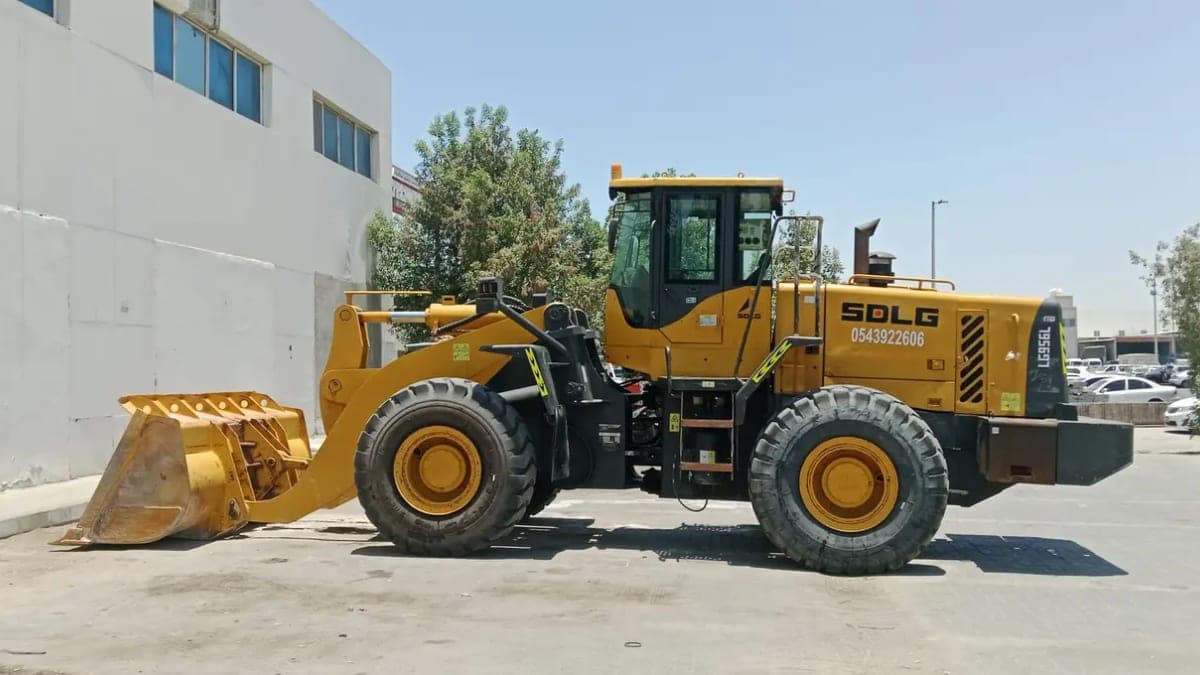
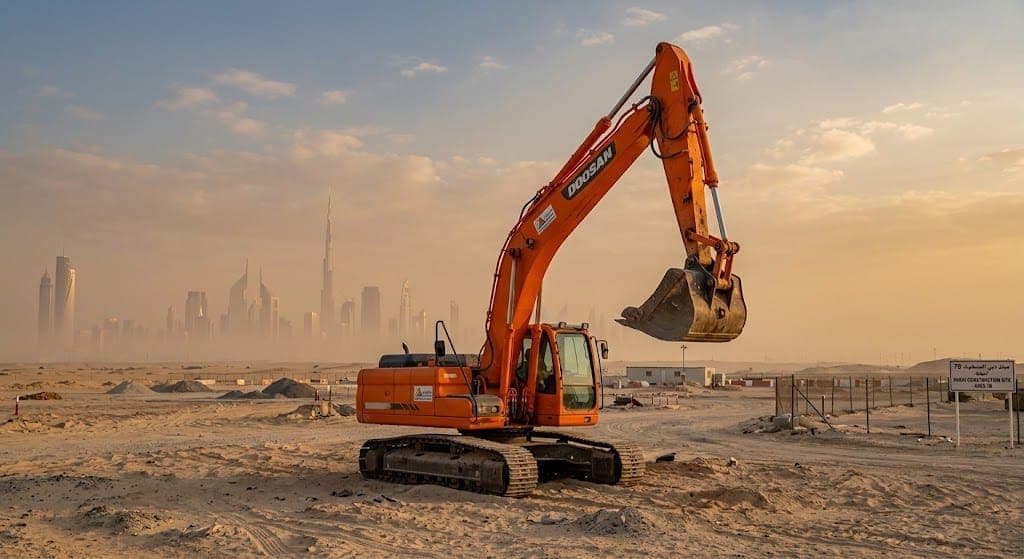
Construction inputs in the UAE have climbed hard this year, and fuel has climbed hardest. Currie & Brown's latest market report, covered by Enterprise on 6 October, puts cement up 16%, concrete up 10% and reinforcement steel up 8% between January and the end of August. Retail diesel went from AED 2.52 a litre in February to AED 4.80 in October. Contractors cannot do much about the price of cement. They can do a lot about plant: how many machines they hire, on what terms, how many hours they burn fuel doing nothing, and whether owning a machine still makes sense. On a typical earthworks package, that is where the margin can be recovered.
What has actually gone up
The headline numbers vary depending on who measured what, and over which months. Some reports have used a round "materials up 15%" figure. We could not find one source for that, and it looks like a blend of several. Here is what the named sources say.
| Item | Change | Period | Source |
|---|---|---|---|
| Cement | +16% | January to 31 August 2026 | Currie & Brown, via Enterprise, 6 October |
| Concrete | +10% | January to 31 August 2026 | Currie & Brown, via Enterprise, 6 October |
| Reinforcement steel | +8% | January to 31 August 2026 | Currie & Brown, via Enterprise, 6 October |
| Reinforcement steel | +16% | Since Q4 2025 | AESG Q2 report, via Gulf Construction, 2 July |
| Concrete works | +10 to 15% | Since Q4 2025 | AESG Q2 report, via Gulf Construction, 2 July |
| Crane and lifting services | +14.3% | 2026 to mid-May | Al Khaleej data, via Enterprise, 19 May |
| Diesel, retail | AED 2.52 to AED 4.80 a litre | February to October 2026 | UAE Fuel Price Committee, via Gulf News and Khaleej Times |
AESG also forecasts UAE tender price inflation of 5 to 8% for 2026. Currie & Brown says diesel has been the most volatile input: up in April, down again, then up in August and September. Khaleej Times reported on 30 September that UAE retail fuel prices have risen more than 60% since the regional war began on 28 February. Enterprise reported in May that shipping disruption through the Strait of Hormuz was adding cost and delay on imported materials.
The contract response is already visible. Currie & Brown reports that tenders now come back with more qualifications, steel prices held for as little as 30 days, and fluctuation clauses becoming normal on longer programmes. If your suppliers are protecting themselves, your plant terms should do the same.
Fuel is now the biggest variable on a dry hire
This is the number most site budgets have not caught up with. A 30-tonne excavator digging and loading will typically burn somewhere in the high teens to mid-20s of litres per hour, depending on the machine and the work. Take 20 litres an hour over a 9-hour shift: 180 litres a day. At February's price that was about AED 454 a day. At October's AED 4.80 it is about AED 864.
Compare that with the hire rate. Excavator listings on EquipmentsFinder in late October show a typical published daily rate of around AED 1,200. On a dry hire, fuel for a hard-working mid-size excavator now costs about 70% of the hire rate itself. Over a 26-day month, the increase since February alone is more than AED 10,000 per machine.
Idling makes it worse. An excavator waiting for trucks with the engine running still burns a few litres an hour, adds hours to the meter, and brings service intervals forward. Two hours of idle a day across a fleet of ten machines is a real monthly cost, and on hire agreements that charge by the hour meter above a monthly cap, you pay for it twice. Most current machines report idle time through the manufacturer's telematics, such as Cat Product Link, Komatsu Komtrax or Volvo CareTrack. Ask your hire supplier for the idle report every month. Many will provide it if asked, and it often shows that a fleet is bigger than the job needs.
Daily, weekly or monthly: where the break-even sits
The maths is simple and still often ignored. Using the same EquipmentsFinder data, the typical monthly excavator rate is about AED 17,300 against roughly AED 1,200 a day, with a typical weekly rate of about AED 6,900. That puts the monthly break-even at around 14 working days. If you need the machine for more than two weeks in a month, take it monthly. If you need it for eight days, do not let the supplier talk you into a month "because it's cheaper per day".
Two details matter in UAE hire agreements. First, check what a "month" means: many monthly rates assume 26 working days of 8 or 10 hours, with extra hours charged on top. A site running double shifts on a monthly rate can see a large overtime line on the invoice. Second, check mobilisation and demobilisation. A low-bed move for a 30-tonne machine across Dubai or Abu Dhabi is charged separately, and on a short hire it can wipe out the rate difference between two suppliers.
| Size | Listings | Rent per day | Rent per week | Rent per month | To buy (used) |
|---|---|---|---|---|---|
| All Excavators | 502 | AED 1,200 | AED 6,900 | AED 17,300 | AED 144,500 |
| Over 30 t | 166 | AED 1,400 | AED 7,000 | AED 23,000 | – |
| 15 to 30 t | 252 | AED 1,100 | AED 6,050 | AED 16,000 | AED 110,000 |
| 6 to 15 t | 4 | – | – | – | – |
| Mini (under 6 t) | 5 | – | – | – | – |
Operator-included or dry hire
Wet hire, with the operator supplied and sometimes fuel too, moves risk to the owner. Dry hire gives you control and leaves the risk with you. Which is better depends on what you are buying.
An operator-included rate makes sense on short jobs, specialist machines and anywhere you cannot supervise closely. The owner carries the operator's visa, accommodation and transport, and a good owner-operator looks after the machine because it is their own. Dry hire makes sense when you have your own trained operators already on payroll and enough work to keep them busy.
With fuel moving every month, the real question is who carries the diesel price. A wet rate that includes fuel at today's price will be priced with a margin for the next increase, so you pay for that risk whether or not it happens. A cleaner structure is a wet or dry rate without fuel, with fuel supplied by the contractor from site bowsers or charged at the monthly Fuel Price Committee rate. That makes the cost visible, and visible fuel use gets managed.
Rent or buy, worked through
Ownership looks cheap until you add everything up. Here is an illustrative example. The figures are assumptions to show the method, not quotes. Replace them with your own.
Take a late-model used 30-tonne excavator bought for AED 300,000 and sold after 36 months for AED 150,000. Depreciation is about AED 4,170 a month. Finance on the full purchase price at 7% adds about AED 1,750. Put maintenance, wear parts, insurance and registration at a placeholder AED 3,000. That is roughly AED 8,900 a month, and you pay it whether the machine works or sits in the yard.
Against a monthly hire of about AED 17,300, the owned machine wins only if it is working, or would otherwise have been hired, for about half the year or more. Below that, renting is cheaper. This is before counting the cost of breakdowns, which on a hired machine are the owner's problem and on your own machine are yours.
Used prices are worth checking before you decide. Asking prices for used excavators on our site have a median of about AED 144,500, and about AED 110,000 for the 15 to 30 t class, with a wide spread by age and hours. You can compare them on our used equipment prices page. A cheap, older unit can make sense for a contractor with steady utilisation and a workshop, and much less sense for a firm whose order book is lumpy.
Where contractors are actually saving money
The firms holding margin this year are not finding one big saving. They are doing several smaller things consistently. They right-size: a 20-tonne excavator on utility trenching instead of the 30-tonne that happened to be free. They match trucks to the excavator so neither waits. They off-hire on time, which sounds obvious until you count machines sitting idle at the end of a package because nobody issued the off-hire notice. And they get competing quotes for anything beyond a week, because rates for the same machine still vary widely between suppliers in the same emirate.
Demand will not ease soon. Dubai alone has just awarded AED 3 billion of stormwater work, covered in our piece on the Tasreef phase 3 drainage contracts, and that will tighten excavator and pump availability in the months ahead.
For a full worked example of a monthly excavator hire, see our excavator rental cost guide.
Take one action this week: pull the hour-meter and fuel records for every machine on site, hired or owned, and set them against the work done. If a machine has run under 14 productive days in a month, move it to daily or weekly terms or send it back. If it has run every day for six months, price the alternative. You can compare excavator rental rates across suppliers, or post an inquiry and let owners quote against your exact terms, fuel clause included.
Sources
- Enterprise: UAE contractors back away from fixed-price contracts as materials costs climb (6 October 2026)
- Zawya: UAE construction market holds firm as delivery landscape shifts, says expert (Currie & Brown)
- Gulf Construction: Construction sector remains resilient despite rising costs, AESG report (2 July 2026)
- Enterprise: Construction is weathering a tougher pricing environment in 2026 (19 May 2026)
- Khaleej Times: UAE petrol and diesel prices for October 2026 announced (30 September 2026)
- Gulf News: UAE petrol, diesel prices for February 2026 announced (31 January 2026)
- EquipmentsFinder: excavator rental rates (listings, late October 2026)