Dubai's AED 3bn Tasreef phase 3: the plant it will need
Dubai has awarded AED 3bn for 100 km of new stormwater mains. What the Tasreef phase 3 jobs need on site and what it means for hire demand and rates.
By Sufian8 min read
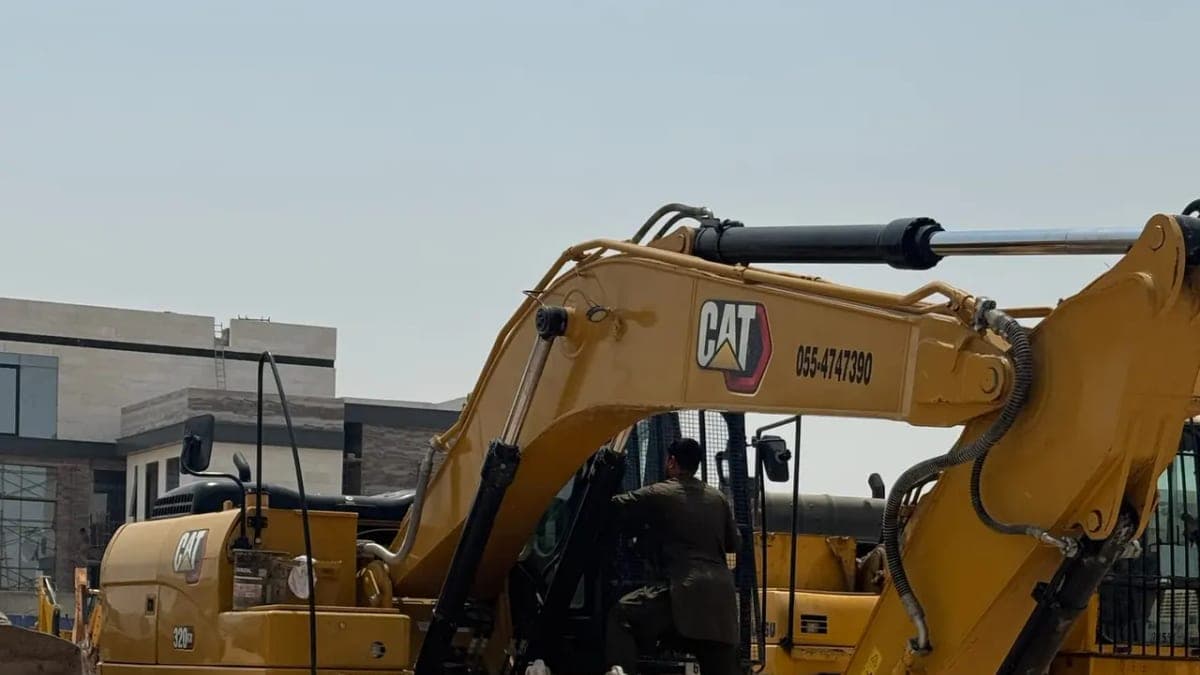
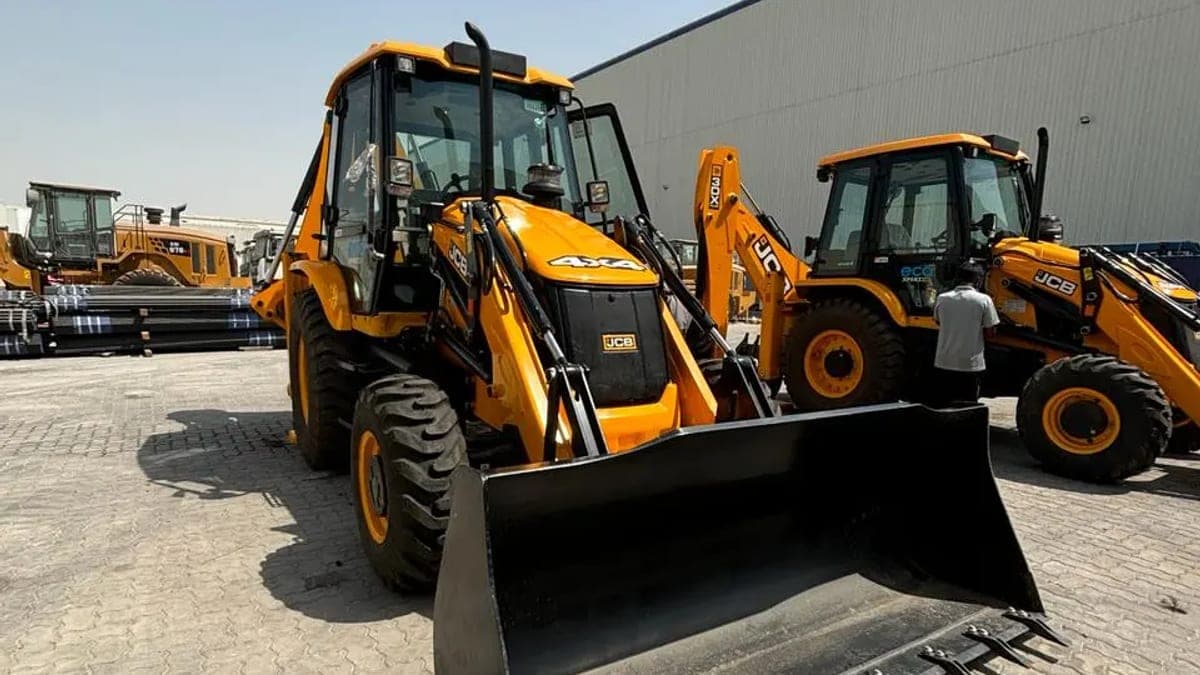
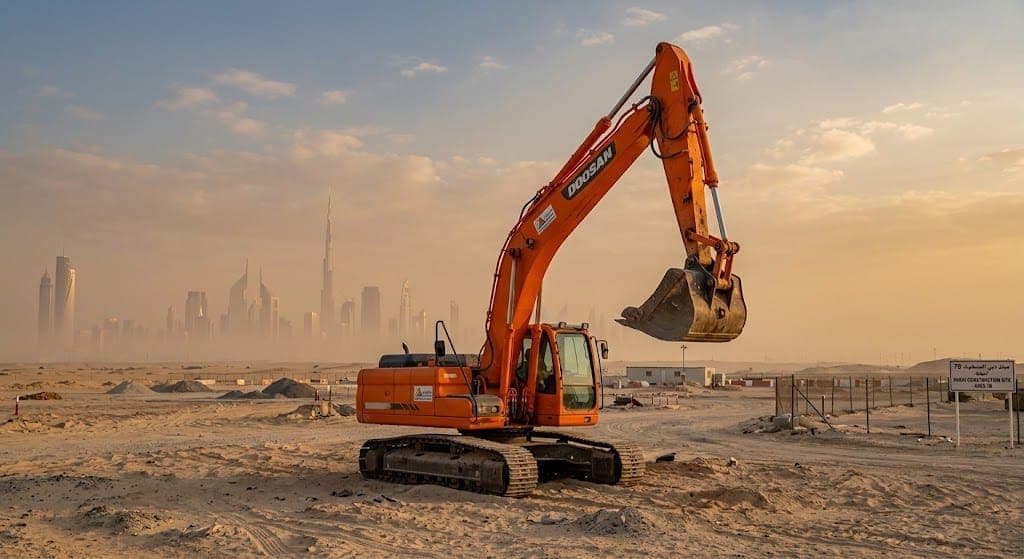
Dubai Municipality has put AED 3 billion of drainage work into the market in a single announcement, and plant hire firms in Dubai will feel it. On Sunday 25 October the Dubai Government Media Office confirmed four contracts under phase 3 of the Tasreef stormwater programme: about 100 km of main drainage lines, with pipe diameters of up to 3 metres, serving nearly 100 square kilometres of the city. Most of that pipe goes under established districts like Jumeirah, Umm Suqeim, Al Wasl and Al Quoz. The jobs will need deep excavation, groundwater control, heavy pipe lifts and a lot of trucking, and they will keep long-term demand for excavators, pumps, shoring and cranes high for as long as the packages run.
What was awarded, and who has it
The municipality named four contractors: ARIFCO Group, China State Construction Engineering Corporation Middle East, DETech Contracting and Nael Construction & Contracting. It did not say which firm holds which package, or what each contract is worth. A day later the picture filled in a little. SaudiGulf Projects reported on 26 October that Detech had confirmed, in a company announcement, contracts worth roughly AED 2.1 billion, about 70% of the phase 3 total. MEED's report the same day linked earlier awards to specific packages, though it noted that Dubai Municipality had not confirmed them.
| Package | Main lines | Areas served | Contractor (as reported) |
|---|---|---|---|
| Jumeirah and Umm Suqeim | about 42 km | Umm Suqeim 1-3, Umm Al Sheif, Jumeirah 3, Al Safa 1-2, Al Manara | Not confirmed |
| Sheikh Zayed Road to Al Khail Road | about 14 km | Al Quoz Industrial 1, 3 and 4, Al Barsha 1 | CSCEC (MEED, TF-15-C2) |
| Al Wasl Road | about 21 km, main and secondary | Za'abeel 2, Al Wasl, Jumeirah 1-2, Al Bada'a, Al Satwa, DWTC 1-2 | Detech (MEED, TF-15-C1, est. $100m) |
| Al Marmoom | about 23 km | Al Marmoom | Arifco (MEED, single source) |
Our reading of the arithmetic: if Detech holds about AED 2.1 billion and the Al Wasl package was estimated at around $100 million (roughly AED 370 million), Detech very likely also holds the 42 km Jumeirah and Umm Suqeim package, the biggest of the four. Nobody has confirmed that yet. No start or completion dates have been published, only a reference to "approved timelines".
The wider programme is worth AED 30 billion. CBNME reported on 26 October that Tasreef was launched in 2024 after the April floods that year. It aims to raise drainage capacity by 700% by 2033, to more than 20 million cubic metres a day. Phase 1 contracts worth AED 1.439 billion were awarded in April 2025 and phase 2 worth AED 2.5 billion in February 2026. Phase 3 is the largest round so far. Detech has also picked up separate Tasreef packages in Jebel Ali, on Sheikh Mohammed Bin Zayed Road and at the East Dubai Canal (MEED, 19 August).
What 100 km of 3-metre drainage needs on the ground
Pipe of this size is heavy civil work. Laying a 3 m line by open cut means a trench several metres wide and, once bedding and cover are added, often six metres deep or more. Under Al Wasl Road, Satwa and the Sheikh Zayed Road crossings, open cut will not be possible everywhere, so expect some pipe jacking or microtunnelling between shafts. Phase 2 already included a main tunnel of up to 4 m diameter (Gulf News, 25 October). Dubai Municipality has not published construction methods for phase 3, so the split between trench and tunnel is still unknown.
| Activity | Typical plant | What to watch |
|---|---|---|
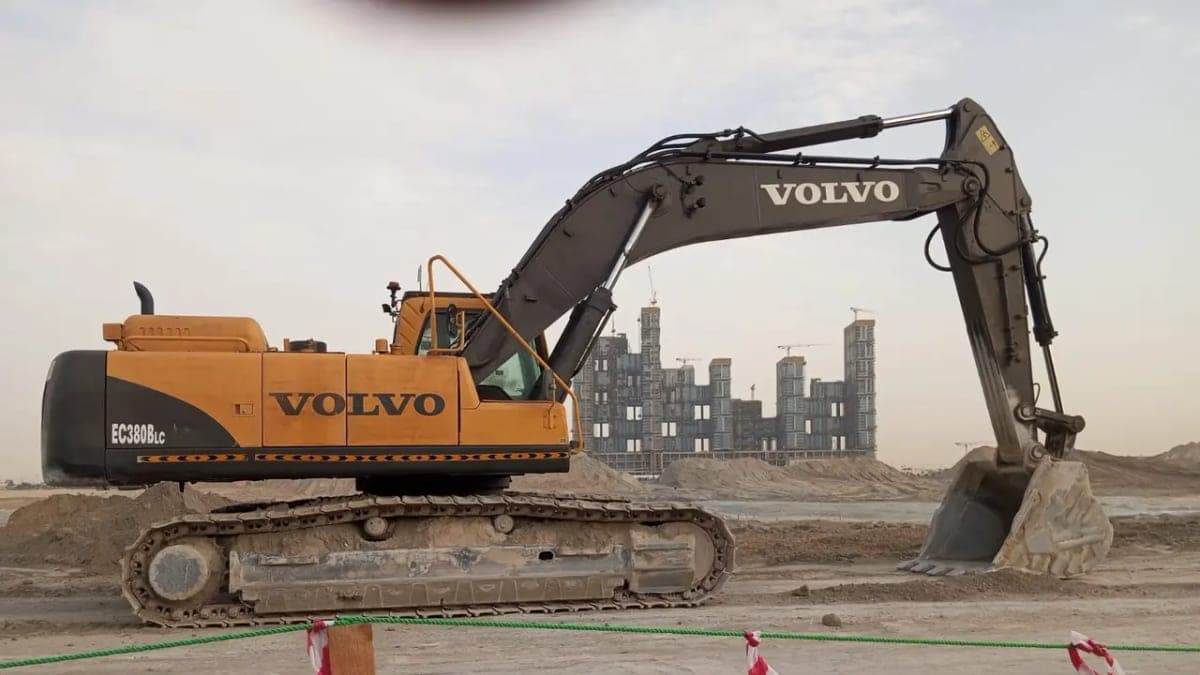
| Bulk trench excavation | 30-50 t crawler excavators (CAT 336/349, Komatsu PC360/PC490, Volvo EC480 class) | Hydraulic hammer attachments where cap rock is hit |
| Deep pits, shafts, manholes | Long-reach excavators, clamshell grabs on crawler cranes | Long-reach units are few in the UAE and get booked early |
| Shoring | Trench boxes, slide-rail systems, sheet piles with excavator- or crane-mounted vibro hammers | Box sizes to suit 3 m pipe plus working space |
| Dewatering | Wellpoint systems, deep-well submersibles, 4-8 inch diesel and electric pumps, gensets | Runs 24 hours; discharge permits and standby pumps |
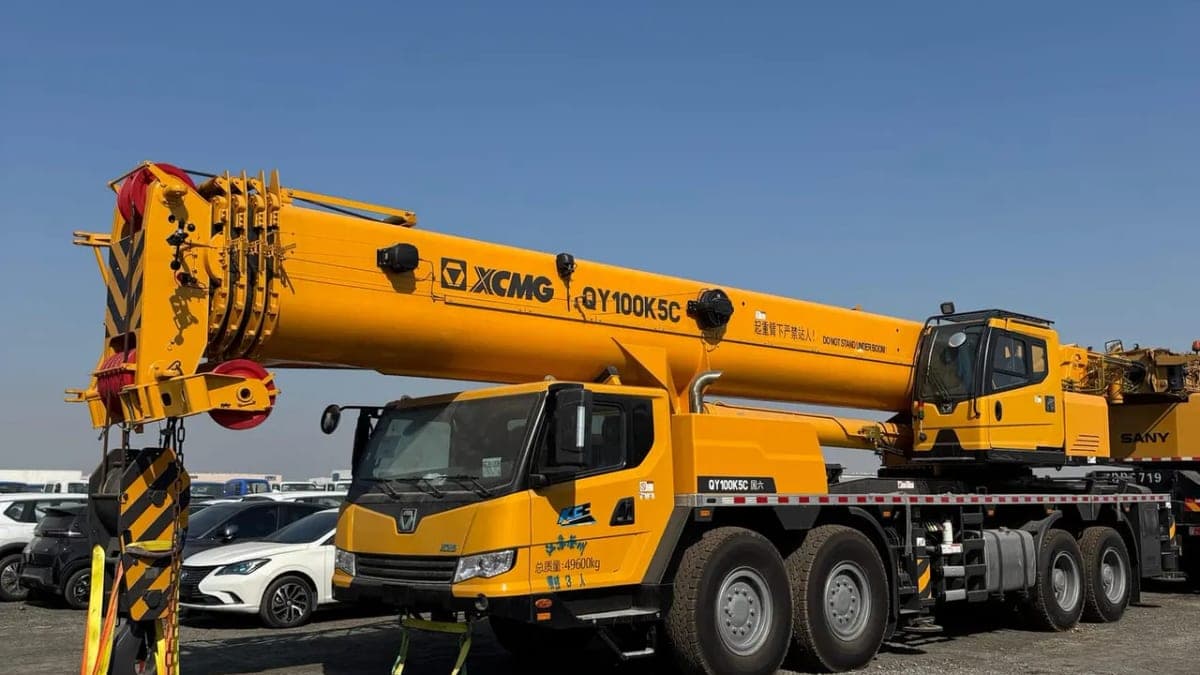
| Pipe handling | 50-100 t mobile cranes, crawler cranes at shafts, rated excavators for smaller pipe | Large concrete pipe sections run into double-digit tonnes |
| Spoil and backfill | 20-25 m³ tipper trucks, wheel loaders at stockpiles | Haul routes through residential streets, night working |
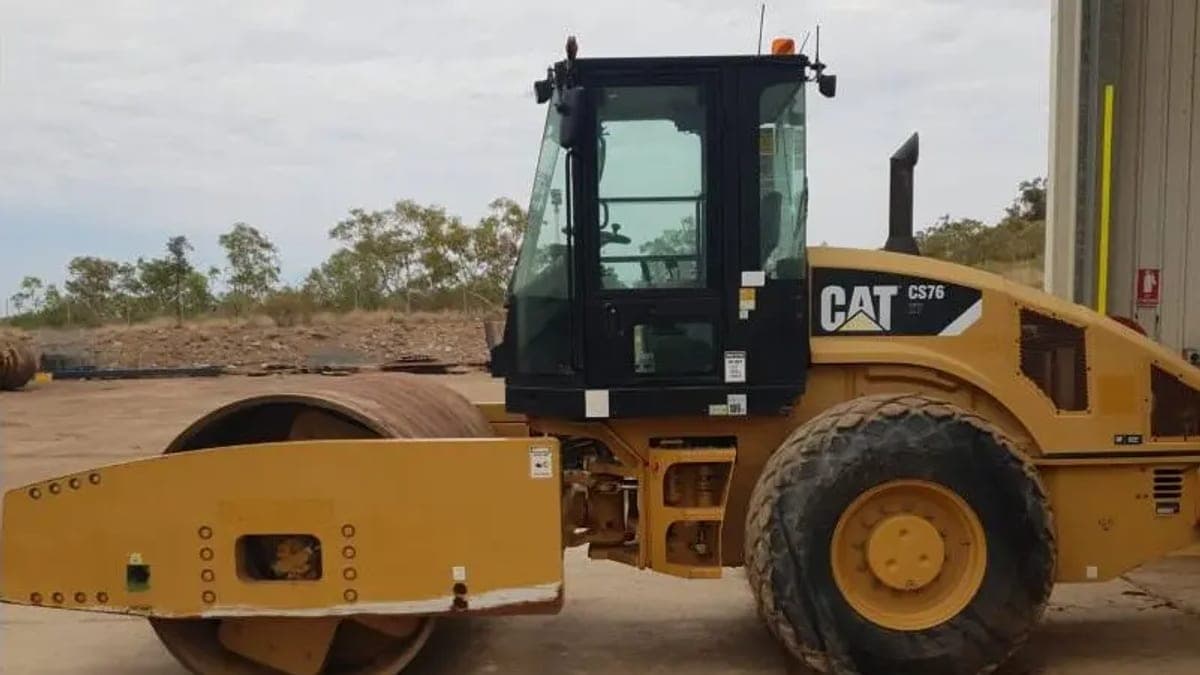
| Compaction and reinstatement | Plate compactors, trench rollers, 10-12 t single-drum rollers, asphalt crews | Layer-by-layer density testing under live roads |
Groundwater is the item that catches people out. Jumeirah and Umm Suqeim sit close to the coast, and a deep trench there will fill with water quickly. Wellpoints and deep wells mean pumps running day and night for the life of each section, with backup units on standby, because a pump failure in a six-metre trench is a safety incident, not just a delay. With UAE diesel at AED 4.80 a litre in October (Khaleej Times, 30 September), up from AED 2.52 in February (Gulf News, 31 January), fuel for a big diesel pump fleet is now a serious line item. Contractors with access to grid power at site compounds will save money on electric submersibles.
The spoil numbers are big too. As rough arithmetic only: if half of the 100 km were open cut, at 25 to 30 cubic metres per metre run, that is well over a million cubic metres to dig, load, haul to stockpile and mostly bring back as backfill. That is months of steady work for tipper fleets, much of it at night on RTA-approved routes.
How it moves hire demand and rates
Four main contractors will self-perform much of this with their own fleets. They will still rent the peaks, and specialist kit most of them do not own in depth: long-reach excavators, slide-rail shoring, wellpoint systems, and extra 50 t and 100 t cranes for shaft lifts. Those categories have a small supplier base in Dubai, and that is where rates will firm first.
The general excavator market has more depth. Listings on EquipmentsFinder in late October show a typical published monthly rate of about AED 17,300 for excavators across the UAE, with daily rates centred around AED 1,200. Mobile cranes show a typical monthly rate of about AED 32,000. Those are asking rates across all sizes, not phase 3 quotes, but they are the baseline. Lifting was already getting more expensive: data from Al Khaleej, reported by Enterprise on 19 May, put crane and lifting services up 14.3% this year.
Timing matters. Dubai has other demand building at the same time, including the Al Maktoum International Airport expansion, where Enterprise reported on 6 October that more than AED 55 billion in contracts is expected to be awarded by the end of 2026. When drainage and airport earthworks both need 30-tonne excavators in the same quarter, owners stop discounting monthly rates. We expect fleet owners to push for 6- and 12-month terms on mid-size excavators and to price short hires harder. For a view of what rising input costs mean for plant budgets, see our guide on keeping plant hire costs down in 2026.
| Size | Listings | Rent per day | Rent per week | Rent per month | To buy (used) |
|---|---|---|---|---|---|
| All Excavators | 502 | AED 1,200 | AED 6,900 | AED 17,300 | AED 144,500 |
| Over 30 t | 166 | AED 1,400 | AED 7,000 | AED 23,000 | – |
| 15 to 30 t | 252 | AED 1,100 | AED 6,050 | AED 16,000 | AED 110,000 |
| 6 to 15 t | 4 | – | – | – | – |
| Mini (under 6 t) | 5 | – | – | – | – |
What subcontractors should line up now
Earthworks, shoring and dewatering subcontractors are being chosen now. If you want a share of this work, get prequalified with the four named contractors before their procurement teams lock in suppliers. Main contractors will ask for valid third-party inspection certificates for every lifting accessory and crane, operator competency cards, insurance, and a maintenance record they can audit. Have that file ready rather than assembling it when the enquiry arrives.
Offer packages, not single machines. A crew that brings a 30 t excavator, a matching trench box, a dewatering pump with a standby unit and an experienced banksman is easier to buy than four separate quotes. The contractor's planners think in metres of pipe per shift, so price your offer that way where you can.
Get fuel terms clear early. Diesel rose by AED 0.50 a litre between September and October alone. A wet rate fixed for 12 months at today's fuel price is a risk to you as the supplier. A fuel adjustment clause tied to the monthly UAE Fuel Price Committee rate is fairer to both sides, and more contractors are accepting it.
Plan your haulage. If you run trucks, check your fleet's night-time permits and plan routes through the residential grids of Umm Suqeim and Al Safa. For tipper capacity in the emirate, tipper truck listings give a quick sense of who has units free. For excavators specifically, Dubai excavator hire is the deepest pool in the country.
Line up your long-reach units, slide-rail shoring and pumps first. Those are the items that will run short before standard excavators do, and the subcontractor who has them can pick the better jobs. For pipe lifts at shafts, compare 50-ton mobile cranes now, before the main contractors book them out.
Sources
- Dubai Media Office: Dubai Municipality awards AED3 billion worth of contracts for four projects under Phase 3 of 'Tasreef' Programme (25 October 2026)
- Khaleej Times: Dubai to add around 100 km of main lines to enhance stormwater drainage (25 October 2026)
- Gulf News: Battling rain, Dubai awards Dh3 billion contracts to add 100km of stormwater drains (25 October 2026)
- SaudiGulf Projects: Detech Contracting wins AED 2.1 billion Dubai Tasreef contracts (26 October 2026)
- MEED: Dubai Municipality confirms AED3bn Tasreef drainage awards (26 October 2026)
- CBNME: Dubai Municipality awards AED3 billion stormwater contracts under Tasreef phase 3 (26 October 2026)
- MEED: Contractor wins Dubai Canal drainage deal (19 August 2026)
- Khaleej Times: UAE petrol and diesel prices for October 2026 announced (30 September 2026)
- Gulf News: UAE petrol, diesel prices for February 2026 announced (31 January 2026)
- Enterprise: UAE contractors back away from fixed-price contracts as materials costs climb (6 October 2026)
- Enterprise: Construction is weathering a tougher pricing environment in 2026 (19 May 2026)