

What Is a Skid Steer? Your Complete Guide to this Versatile Machine
Skid steers are one of the most versatile and efficient pieces of construction machinery. You've come to the right place if you've ever wondered what a skid…
By Sufian7 min read
Skid steers are one of the most versatile and efficient pieces of construction machinery. You've come to the right place if you've ever wondered what a skid steer is and why these compact machines have become indispensable across a variety of industries. EquipmentFinder understands that choosing the right piece of equipment begins with understanding exactly what you are purchasing.
A skid steer is a compact, engine-powered machine with lift arms that are capable of attaching buckets and other labour-saving tools. With their small footprint and ability to turn within it, these nimble construction machines are ideal for tight-space machine operations where larger equipment cannot manoeuvre efficiently.
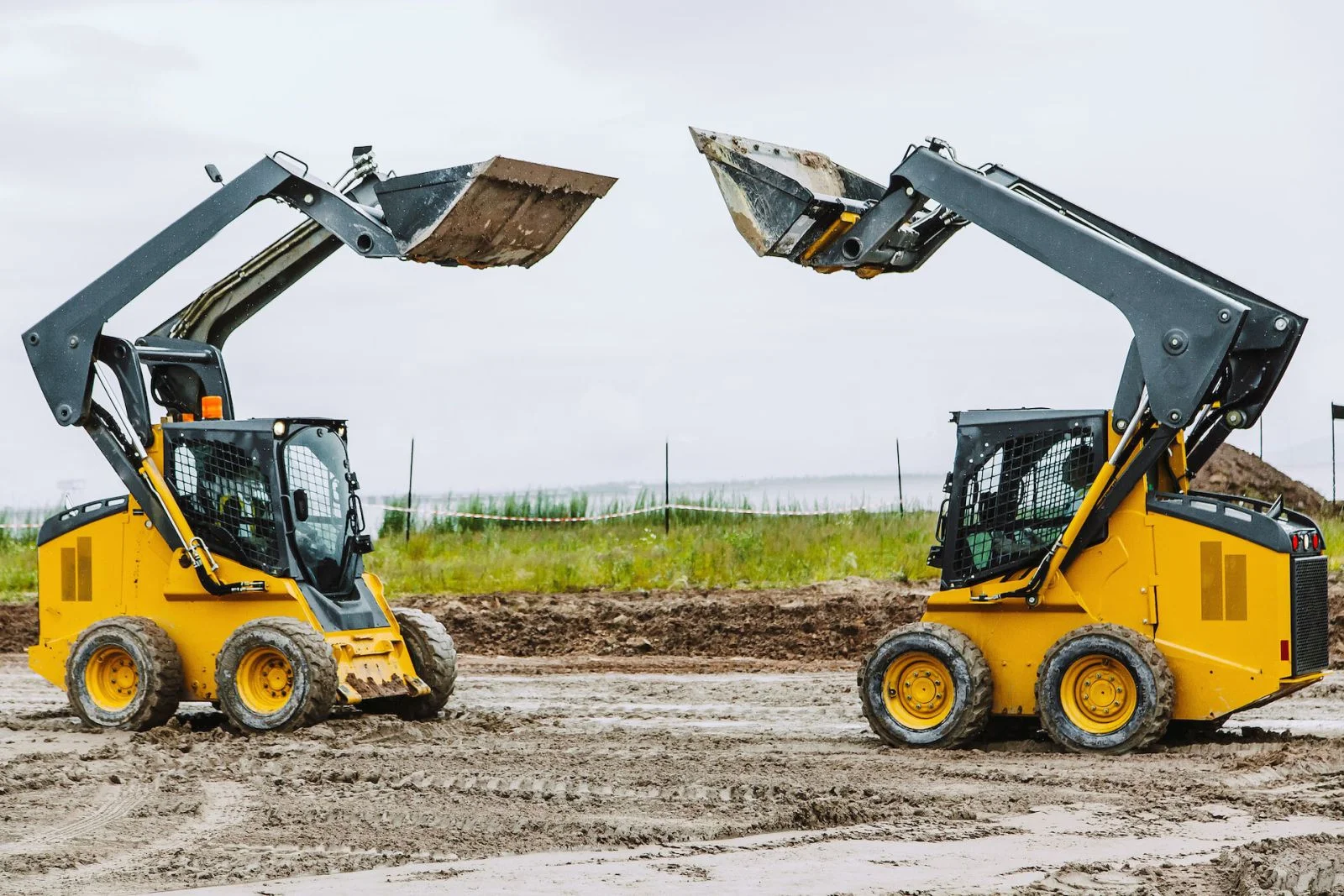
Key Components of Modern Skid Steers
There are several critical components that make a skid steer such a versatile piece of compact equipment:
Engine and Power Systems: Skid steer engines typically range from 45 to 100 horsepower, providing both locomotion and hydraulic power. Engine placement varies from manufacturer to manufacturer, with some having rear-mounted engines and others having side-mounted ones.
Hydraulic Arms and Lift System: Skid steers are powered by hydraulic arms. Depending on the machine's size and specifications, these powerful systems can lift loads from 1,500 pounds to over 4,000 pounds. Additionally, the hydraulic system powers the attachments, allowing the machine to be incredibly versatile.
Quick-Attach System: The quick-attach system is perhaps the most revolutionary feature of modern skid steer loaders. With this standardised connection point, operators can swap between dozens of different loader attachments within minutes, transforming it from a basic bucket loader to a specialised tool.
How Does a Skid Steer Work?
Skid steers are characterised by their distinctive steering mechanisms. A steering machine uses a slower wheel on one side to steer than the slower wheel on the other side. Left wheels spin faster when you want to turn right, causing the machine to pivot or "skid" in that direction. Skid steers are able to manoeuvre so easily because of this unique steering system. The machine can turn within its footprint, making it an ideal machine for working in cramped spaces.
Hydraulic arms are another crucial component of these machines. They are capable of lifting, lowering, tilting, and controlling various attachments with precision. Both the movement and hydraulic functions are controlled by joysticks or hand controls while the operator sits in a cab or on an open platform.
Types of Skid Steers Available
Wheeled Skid Steer
Wheeled skid steers remain the most popular choice for general construction and landscaping work. These machines provide smooth operation on concrete, asphalt, and packed dirt surfaces as well as excellent speed on hard surfaces. Typically, they are less expensive and require fewer maintenance procedures than tracked versions. The speed and efficiency of wheeled models are best suited to flat, firm surfaces. They can, however, lose traction on soft, muddy, or uneven terrain.
Tracked Skid Steer
Tracked skid steers, also known as multi-terrain loaders, use rubber tracks instead of wheels. The tracks distribute the machine's weight over a larger area, reducing ground pressure and protecting delicate surfaces like lawns and driveways. Whether the terrain is soft, muddy, or steep, track-based models provide superior traction. They are effective on sand, snow, mud, and loose gravel, where wheeled versions might get stuck.
Mini Skid Steer
Typically weighing less than 2,000 pounds, mini skid steers are the smallest of these machines. Compact units can fit through standard doorways and work in extremely confined spaces such as basements, renovation projects indoors, or narrow side yards. Despite their small size, mini skid steers are powerful machines. Landscape projects, small excavations, and tasks that require precision in tight spaces are all ideal for them.
Popular Skid Steer Attachments and Their Uses
A skid steer is most versatile when equipped with compatible loader attachments:
Buckets: There are standard dirt buckets, high-capacity buckets, rock buckets, and speciality buckets.
Forks and Material Handling: Pallet forks, bale forks, and grapple attachments are used to transfer different types of materials.
Earthmoving Tools: Post hole augers, trenchers, and graders are used for excavation and finishing of surfaces.
Specialised Attachments: Tree spades, stump grinders, brush cutters, and concrete mixers increase the machine's versatility.
What Is a Skid Steer Used For?
Construction and Demolition
A skid steer is the Swiss Army knife of job site versatility in the construction industry. Due to their compact size, they are capable of working in tight spaces, while their power allows them to handle substantial loads. Material handling, site preparation, utility work, and debris removal are all common construction applications.
Landscaping and Ground Maintenance
Skid steers are an essential landscaping tool in the industry. Especially tracked models, they provide gentle ground pressure (and precise control) that makes them ideal for hardscape installation, moving soil and mulch, tree removal, and general site preparation. With the quick-attach system, landscapers can easily switch between buckets, forks, augers, and specialised attachments.
Agriculture and Farming
Compact equipment is essential to the daily operation of modern farms. With skid steers, you can handle feed, clean barns, transport materials, and prepare fields. The versatility of these machines enables farmers to perform multiple tasks with a single machine, thereby improving efficiency and reducing equipment costs.
Snow Removal and Seasonal Work
For snow removal operations, skid steers are invaluable due to their tight-space capabilities. These machines can be equipped with snow blades, snow blowers, and salt spreaders for clearing parking lots, sidewalks, and other areas where larger equipment is unsuitable.
Benefits of Using Skid Steers
1. Exceptional Versatility
Skid steers offer incredible versatility on job sites, which is their primary advantage. One machine with multiple attachments can replace several specialised pieces of equipment, transforming from a loader to a trencher to a sweeper in minutes. This consolidation reduces equipment costs, maintenance requirements, and storage needs significantly.
2. Cost-Effectiveness
The cost of renting or purchasing a skid steer is often less than that of buying multiple specialised machines. Skid steers reduce labour costs and increase productivity, which means many businesses see a return on their investment within a year after investing. Fuel-efficient engines and simple maintenance requirements keep operating costs low.
3. Unmatched Manoeuvrability
Due to their compact footprint, skid steer loaders can operate in areas where larger equipment cannot. Their ability to manoeuvre through construction gates, work between buildings, and operate in finished areas without damaging the property makes them ideal for construction work. Their ability to work in tight spaces makes them ideal for residential and urban construction.
4. Quick Setup
Compared to larger construction equipment, skid steers require minimal setup time. Operators can switch attachments without tools within five minutes using their quick-attach system. As a result, more productive hours are spent on the job site, and projects are completed more quickly.
5. Easy Transportation and Mobility
Skid steers can usually be transported on standard equipment trailers without requiring special permits. Contractors can move quickly between job sites and respond to emergency situations due to this mobility. Additionally, they can be stored in smaller spaces, reducing facility costs for equipment storage.
6. Operator-Friendly Design
Modern skid steers have intuitive joystick controls that are easy to master for most operators. Operators are kept safe with built-in safety features such as rollover protection structures (ROPS) and falling object protection structures (FOPS). During operation, the enclosed cab protects the operators from the weather and flying debris.
Conclusion
Understanding skid steers opens up a world of possibilities for construction, landscaping, and agriculture. The remarkable machines combine power, versatility, and manoeuvrability in a compact package that can change how you approach difficult tasks.
Investing in this light-duty equipment, whether through purchase or rental, results in greater efficiency and reduced labour costs. If you're considering skid steer options for your business or project, EquipmentsFinder can help you find the right one. You'll find the right combination of features, price, and support with our extensive network of dealers.
Frequently Asked Questions (FAQs):
What is a skid steer used for?
Skid steers are used in multiple industries for material handling, excavation, grading, demolition, and other specialised duties. With their versatility and manoeuvrability in confined spaces, they excel at performing various functions with different attachments.
How does a skid steer work?
Skid steers operate with differential steering, which allows the left and right sides to move at different speeds or even in opposite directions. By doing this, the machine is able to turn within its own footprint. Both the lift arms and any attached implements are powered by hydraulics.
What's the difference between a skid steer and a track loader?
The main difference is the undercarriage. Skid steers have wheels, while track loaders (also called compact track loaders or multi-terrain loaders) have rubber tracks. However, track loaders move more slowly than wheeled models due to their better traction and flotation.
Can skid steers use different attachments?
Yes, modern skid steers feature quick-attach systems that allow operators to quickly change attachments. The versatility of skid steers is one of their most significant advantages.
What size skid steer should I choose?
The size of the skid steer you choose depends on several factors, including your typical job requirements, operating space constraints, and budget. A mini skid steer (under 1,500 pounds) is perfect for landscaping, indoor work, and tight spaces. Most commercial applications are handled by standard skid steers (1,500-2,500 lbs). Those with large frames (3,000 lbs or more) are the best for heavy construction and industrial tasks.


