

8 Types of Rollers Commonly Used in Construction Projects
A compact roller, also known as a road roller, is one of the most commonly used heavy machinery in the construction industry. Generally, they are used only…
بقلم Sufian7 دقائق قراءة
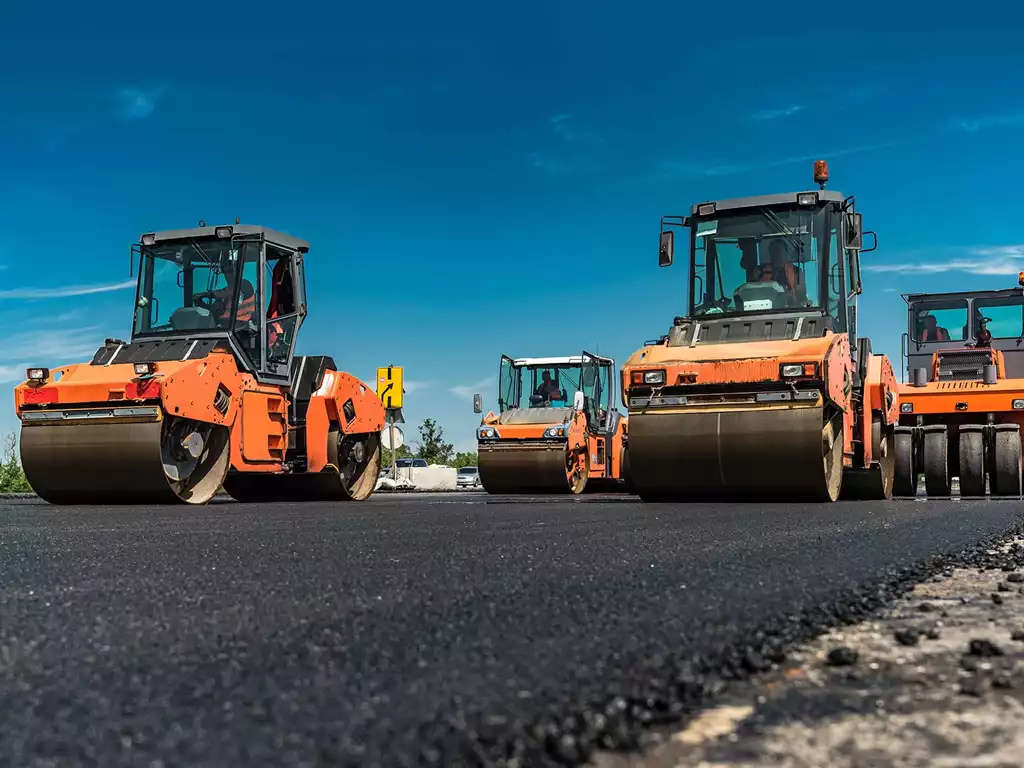
A compact roller, also known as a road roller, is one of the most commonly used heavy machinery in the construction industry. Generally, they are used only for laying out or completing foundations, so they are not needed for as many projects. The compaction of soil ensures the stability and strength of the ground beneath roads, buildings, and other structures. Construction projects are more efficient and quality when rollers are used.
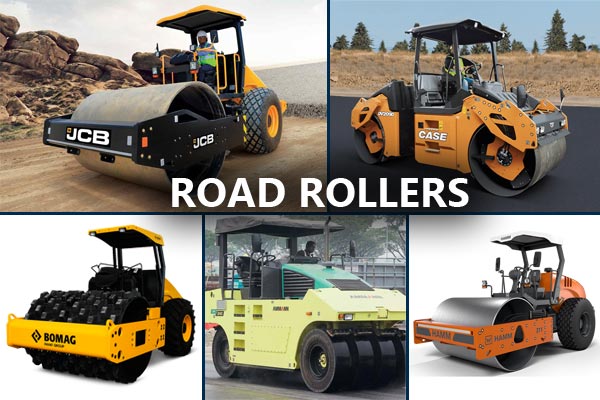
Road rollers are most often used for road construction or for creating compact foundations for large areas, although they can also be used in areas as diverse as landfill sites or agricultural projects. The primary use for road rollers is to crush, knead, or vibrate loose materials by applying direct pressure. In order for a structure to be durable and long-lasting, construction rollers create a smooth and firm surface. Various types of road rollers are available for different construction needs. Each of them is discussed below.
Different Types of Road Rollers Used in Construction
1. Pneumatic Rollers
A pneumatic roller, sometimes called a pneumatic tyre roller, is a large, ride-on roller with a number of rows of rubber tyres. Rubber tyres cover 80% of the space and maintain a uniform pressure throughout their width. They are typically used for pavements to smooth and polish the surface, but they can also be used for cold-laid bituminous or cold-mixed pavements.
2. Double Drum Rollers
Because of the dual drum asphalt roller's features, it can make your job easier if you need to repair big machines and build huge construction sites. There are logically arranged controls, vibration-dampening platforms, Roll Over Protective Structures (ROPS), and Swivel Seats on this roller heavy equipment. Operators can drive the roller safely or ergonomically with these combinations.
Double Drum Rollers are mostly used to spread coils on the road so that vehicles can travel smoothly. To understand the features of this roller, the driver needs training.
3. Single Drum Rollers
Earthwork projects often call for the use of single drum rollers, which are powerful machines. Featuring a large, heavy steel drum at the front and rugged rubber tyres at the rear, it offers excellent traction on uneven terrain. Designed to compact loose soil, gravel, sand, and other granular materials, this roller builds solid roads, buildings, and infrastructure.
A single road roller price is operated from the vehicle's central console. Currently, there are three layout options for surface compacting tasks. By choosing only the best quality parts, you can ensure maximum functionality and dependability. There are details like the strengthened front scraper, the sturdy 32 mm thick drum, and the turbocharger with pre-cleaner that show off the design-for-quality principle.
4. Vibratory Rollers
Vibratory rollers are primarily used in highway and road construction. A vibratory roller is widely used when soil or asphalt needs to be compacted loosely. This heavy equipment roller can be used for ground compaction or stabilization at construction sites.
Modern manufacturers are designing tandem compactors that weigh between 3.5 and 9 tons, as well as soil compactors that weigh between 10 and 12 tons. An experienced driver is needed to use vibratory rollers on the most difficult roads and highways, where the slightest mistake could cause a fatal accident. Comparing 3.5 tons and 9 tons of tandem compactors with reliable features is easy.
5. Sheepsfoot Rollers
A sheepsfoot roller is a machine that can remain static or vibrate and is used for compacting soil that contains sand gravel and fine-grained clay. Most recent variants are equipped with drums that can exert a pressure of 14 kg/square cm and are fastened to luggage.
Several types of lugs exist, such as those with a clubfoot profile, prismatic design, and a spindle-shaped, broad base. The drum weight can be increased similarly to the weight of rollers of smooth wheels by adding water, sand, or steel parts. Compaction of dense clays and silty clays is particularly successful with sheep foot rollers.
Both road and rail construction use these rollers. Most commonly, lugs come in prismatic, spindle-shaped, and clubfoot styles. The rollers can be either single-drum, tractor-towed mobile sheepsfoot rollers or tandem-drum, tractor-towed mobile sheepsfoot rollers. These drums can be ballasted with water, wet sand, or steel pieces to increase their weight.
6. Padfoot/ Tamping Rollers
The lugs on these rollers have a larger area than those on sheepsfoot rollers. Static pad foot rollers are also called tamping rollers. Their static weight ranges between 15 and 12 40 tonnes, and their static linear drum loads range between 30 and 80 kg/cm. They are replacing sheepsfoot rollers because of their larger production capacity.
The degree of compaction achieved is higher, and the density is more uniform. Even large lumps can be broken by them because they operate at high speeds. Spreading is possible with rollers equipped with levelling blades. A self-propelled pad foot roller heavy equipment can weigh up to 11.0 tonnes and have a linear load of 30 kg/cm to 50 kg/cm. They can compact clay materials with a thickness of 30 cm to 40 cm.
7. Grid Rollers
A grid roller has a cylindrical heavy steel surface with square-shaped holes formed by a network of steel bars. The heavy equipment roller is often ballasted with concrete blocks. In general, this type of roller is towed and produces high contact pressure without kneading. These machines are typically used for the compaction of well-graded coarse soils and weathered rocks, often at the subgrade and subbase of roads. They are not appropriate for clayey soils, silty clays, or uniform soils.
8. Walk-Behind Rollers
The walk-behind roller is a small, manually operated machine that is often purchased as used construction machinery due to its durability, convenience, and flexibility. Small construction sites and driveways often use these drums for urban projects, driveways, and driveways. Models with hydrostatic drive systems offer smooth operation and better control. DIY enthusiasts who need a compact yet powerful solution to compacting small areas are fond of walk-behind rollers.
Factors to Consider Before Choosing a Construction Roller
Choosing the right construction roller machine requires more than just picking the first one you see. The compaction process has its challenges, so you need to think about a few key things to ensure you get a solid, long-lasting result. Consider these points:
Soil Type
The first thing you need to do is figure out what kind of soil you are dealing with. Compaction reacts differently to different soils. You can use a sheepsfoot roller to knead sticky clay with ease. The vibratory roller is better suited to loose soil, sandy soils, and gravelly soils because it shakes the particles into place.
Size of the Project
How big is your construction site? Heavy-duty rollers cover more areas faster on large-scale projects like highways and commercial buildings. It might be enough to use lighter equipment for smaller jobs without overcomplicating things.
Compaction Requirements
Each project requires a different level of compaction. For some, a firm surface might be necessary, while for others, a dense, deep compaction might be necessary. You'll need a roller with more weight and stronger vibration if you need to compact several layers deep.
Surface Material
Compaction also depends on what you're doing. The perfect, even finish of asphalt requires smooth wheel rollers. When working with rough materials like crushed rock, grid rollers help crush and settle everything.
Budget and Equipment Access
Budget is one of the most important factors. It might be the perfect construction roller machine in your mind, but it must fit your budget and be available when you need it. Renting equipment from companies like EquipmentsFinder is a cost-effective option for many contractors.
Weather and Site Conditions
A roller's performance can be affected by the environment. The rubber tyres of pneumatic tyre rollers can adapt to soft or wet ground without sinking too much, so they work better in wet or soft soil.
Space and Maneuverability
Last but not least, consider how much space you have. There may be a need for smaller, more flexible rollers that can turn and move easily in tight spaces, such as narrow trenches or small residential lots.
You can choose the best roller by weighing all these factors for a smoother, stronger, and longer-lasting project.
Final Thoughts:
Choosing the right roller is crucial to the success and efficiency of any construction project. The right roller type ensures optimal compaction, which directly impacts the structure's stability, durability, and longevity. Understanding the project requirements and soil types, evaluating roller specifications, and considering cost-efficiency are all crucial to achieving the best results. EquipmentsFinder is the place to go when you need reliable roller equipment for your next project. Saving you both time and money, we simplify the process of finding, comparing, renting, or purchasing roller construction equipment.


