

Construction Forklift: The Ultimate Guide to Heavy Lifting on Construction Sites
As one of the most versatile and essential construction site lifting and material handling equipment, the forklift is a necessity on every job site. For both…
By Sufian7 min read
As one of the most versatile and essential construction site lifting and material handling equipment, the forklift is a necessity on every job site. For both project success and workplace safety, it is imperative to understand the capabilities and applications of construction forklifts. With EquipmentsFinder, we've helped countless construction projects improve efficiency. However, picking the wrong type can cost you time, money, and create safety hazards.
What is a Construction Forklift?
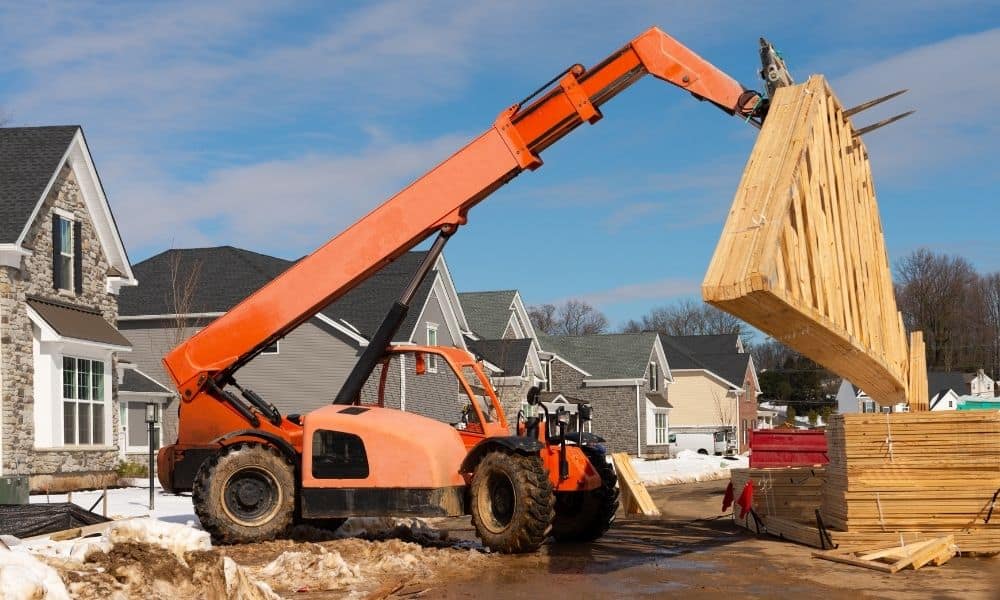
Construction forklifts are mobile and versatile equipment designed to lift and transport loads at construction sites. These machines are usually used in factories, construction sites, manufacturing facilities, warehouses, and storage facilities. Forklifts are heavy industrial vehicles with a power-operated platform at the front and an attachment like a fork to move and pick up items.
Unlike warehouse forklifts that operate on smooth concrete floors, construction forklifts are designed to handle rough terrain, uneven surfaces, and outdoor environments. They are equipped with reinforced frames, powerful engines, and specialised tires that are designed to withstand challenging construction site conditions. As with traditional forklifts, construction variants offer enhanced durability, higher ground clearance, and often greater reach capabilities to meet the unique demands of construction jobs.
Why Are Construction Forklifts Essential for Job Sites?
Forklifts are essential on construction sites because they enhance efficiency, safety, and versatility in material handling. They carry heavy loads across rough and uneven terrain, such as pallets of bricks, steel beams, timber, and other building materials, tasks that would otherwise require extensive manual labour or multiple pieces of equipment. Both large-scale commercial developments and smaller residential projects depend on their ability to operate in tight spaces.
Key Features of Construction Forklifts
Forklift Handle: A forklift has a prong, or fork-like appendage, that is used for lifting and lowering items. As a result, the forklift can easily pick up heavy loads and transfer them from one location to another. Forks can be raised and lowered, so materials can be arranged vertically to maximise efficiency on a work site.
Power Sources: Forklifts used in construction use diesel engines for maximum power and fuel efficiency in outdoor applications, but electric and propane engines are available for indoor or environmentally friendly applications.
Forklift Load Capacity: For construction models, the capacity typically ranges from 5,000 to over 50,000 pounds. The capacity decreases as the lift height increases and the load centre moves forward from the mast.
Forklift Mast & Lift Height: Vertical lifting assemblies determine the maximum height of the machine, and construction forklifts have lift heights that range from 10 to over 50 feet, based on the application requirements and the design of the mast.
Tire Type (Forklift Tires): Forklifts designed for construction use pneumatic tires with aggressive tread patterns that provide traction on uneven surfaces. Solid tires provide puncture resistance for environments that are prone to debris.
Different Types of Construction Forklifts
Rough Terrain Forklift
The rough terrain forklift is the most common type of construction lifting machinery. These units feature large, knobby tires that are similar to those used on off-road vehicles, providing excellent traction on uneven surfaces, mud, gravel, and loose soil. The rough terrain forklift is designed to navigate obstacles that would stop conventional warehouse equipment.
Key Features:
Maximum traction with four-wheel drive
Protection for the undercarriage
Ground clearance for navigating obstacles
Consistent power delivery with diesel engines
Superior grip with knobby pneumatic tires
Industrial Forklift for Construction
Forklifts adapted for construction work bridge the gap between warehouse efficiency and construction site durability. All-terrain capabilities and enhanced protection make these units suitable for construction environments without sacrificing precision or control.
Key Features:
Power options include electric, propane, and diesel
Pneumatic or cushion tires
High load capacity
Hydraulic controls for delicate operations
Comfortable ergonomic design for operators
Telescopic Forklift (Telehandler)
A telescopic forklift, also known as a telehandler, combines the lifting capabilities of a traditional forklift with the reach of a crane. They are ideal for multi-story construction projects due to their extendable booms that can reach heights of up to 50 feet.
Key Features:
Horizontal extension of 20-50 feet on a telescopic boom
Some models feature 360-degree rotation
Hydraulic circuits for multiple attachments
Accurate positioning with precision joystick controls
Quick-attach system for rapid attachment and detachment
Pallet Jack
These low-profile units are designed for ground-level pallet handling and material transportation. Compact machines like these are ideal for moving palletised materials like tiles, fixtures, and packaged supplies in confined spaces.
Key Features:
Options for manual or electric operation
A low-profile design with a lifting height of 3-8 inches
Compact dimensions for tight spaces
Transportable lightweight construction
Material handling precision
Side Loader Forklift
Material handling equipment with sideways-mounted forks designed to handle long materials such as lumber, pipes, and steel beams in narrow aisles. They are particularly useful for interior construction and tight jobsite logistics because they do not require wide turning radii.
Key Features:
Long material handling with sideways-mounted forks
Load rotation capability of 90 degrees
Long-load stability systems
Precision material placement with superior visibility
Small turning radius for confined spaces
Applications of Construction Forklifts
Material Transport: Forklifts transport bricks, blocks, lumber, steel beams, cement bags, and other heavy building materials from storage areas to active work zones.
Pallet Handling: Construction materials are often delivered on pallets. Lifting and moving pallets across the site with forklifts saves time and reduces manual labour.
Elevated Material Placement: Telescopic forklifts can be used to place materials on scaffolding platforms or upper floors, which is essential for multi-story constructions.
Loading and Unloading: Forklifts reduce turnaround times and ensure safe handling of materials by loading and unloading trucks and shipping containers.
Site Cleanup and Waste Handling: Forklifts can be used to clear debris, transport waste materials, or even support demolition projects with the right attachments.
Infrastructure and Utility Work: Forklifts are used to safely and accurately position pipes, concrete forms, and other infrastructure components during the construction of roads, bridges, and utilities.
Maintenance Considerations for Construction Forklifts
Construction forklifts must be maintained properly to ensure safety, performance, and long-term equipment reliability. Regular maintenance helps prevent breakdowns and costly repairs, as these machines operate in harsh environments, including dust, debris, rough terrain, and heavy lifting. Among the key maintenance considerations are:
Daily Inspections: Operators should check tires, forks, mast, hydraulic lines, brakes, and lights before each shift. This helps detect wear and tear before it causes operational problems.
Tire and Undercarriage Care: Construction forklifts often operate on rugged terrain, which accelerates tire wear. Undercarriages should be kept clean to prevent buildup that could affect the steering and mobility of pneumatic tires.
Fluid Levels and Filters: Check the level of engine oil, hydraulic fluid, coolant, and transmission fluid regularly. Replace dirty filters promptly to prevent overheating and system contamination.
Lubrication and Greasing: Telehandlers require proper lubrication to reduce friction and prevent premature wear of their moving parts.
Battery and Electrical Systems: The health of the battery is crucial for electric or hybrid forklifts. Make sure terminals are clean, charged, and corrosion-free. It is also important to check electrical wiring regularly.
Scheduled Servicing: Maintain major components like the engine, transmission, and hydraulics according to the manufacturer's recommendations. Certified technicians can address issues before they escalate by partnering with you.
Maximise Construction Efficiency with a Construction Forklift
Construction forklifts offer unmatched versatility in material handling and site logistics for modern construction projects. Whether it's handling pallets or positioning complex structures, these machines enhance productivity while maintaining safety standards essential for project success.
Choosing the right material handling equipment can lead to project success or costly delays. At EquipmentsFinder, we understand the importance of choosing the right material handling equipment. You'll find the perfect model for your specific application requirements among our extensive selection of construction forklifts, from compact utility models to heavy-duty industrial units.
Frequently Asked Questions (FAQs):
What's the difference between a forklift and a telehandler?
Both forklifts and telehandlers lift objects, but telehandlers have an extendable boom that allows them to reach greater heights. Standard forklifts offer better precision and stability for close-range pallet handling operations, while telehandlers excel in construction applications requiring material placement at a distance or height.
Can forklifts be used on uneven terrain?
Yes, rough terrain forklifts are designed specifically for uneven surfaces. They have four-wheel drive, high ground clearance, and specialised tires that provide excellent traction on soft soil, gravel, and irregular surfaces.
How much weight can a construction forklift lift?
Depending on the model and configuration, forklift load capacities typically range between 5,000 and 80,000 pounds. The actual lifting capacity declines with increasing height and forward reach, which is why it is necessary to consult load charts according to the specific operating conditions.
What attachments can be used with a forklift?
Forklift attachments for construction include fork extensions, side shifters, rotators, concrete buckets, material handling buckets, pipe handlers, and lifting hooks. The compatibility of an attachment depends on the hydraulic capacity of the forklift as well as the mounting system.
Is a rough terrain forklift different from a warehouse forklift?
Yes, absolutely. A rough terrain forklift is equipped with enhanced ground clearance, a four-wheel drive system, specialised tires, and reinforced construction for outdoor operation, while a warehouse forklift emphasises precision, manoeuvrability, and efficiency on smooth surfaces in controlled environments.


