

Main Components of a Backhoe Loader
Do you know why backhoes are nicknamed the Swiss Army knives of construction? They are capable of digging trenches on construction sites and lifting heavy…
بقلم Wajahat Ali Usmani6 دقائق قراءة
Do you know why backhoes are nicknamed the Swiss Army knives of construction? They are capable of digging trenches on construction sites and lifting heavy materials. But what's the secret to their adaptability? To understand how they work, it is essential to understand their key components.
Here at EquipmentsFinder, we've helped countless contractors save time and money by mastering these fantastic machines. Backhoe loaders are essential workhorses on job sites worldwide. This comprehensive guide breaks down every component that makes them work so well globally. So let’s get started.
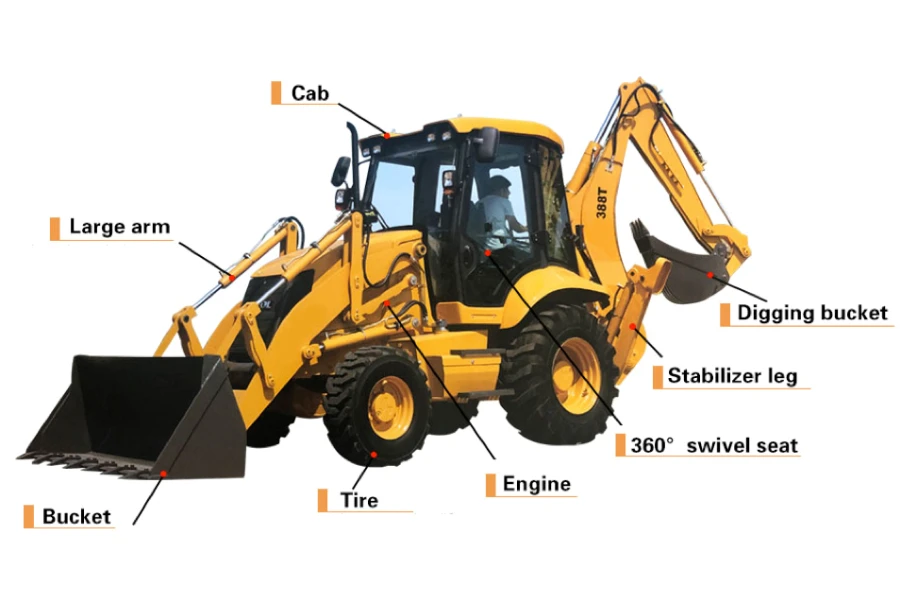
What is a backhoe?
A backhoe loader is a powerful combination of two essential machines—an excavating machine mounted on wheels or tracks, with a bucket attached to its two-part articulated arm. Backhoes are actually digging machines that push earth backwards instead of lifting it forward as traditional shovels do. They also feature a loader bucket on the front, making them two machines in one. Construction, landscaping, roadwork, and utility projects rely heavily on backhoes because of their dual functionality. Equipments Finder considers backhoes the most versatile heavy-duty machines because they are capable of performing multiple tasks that would otherwise require a separate machine for each one.
Main Components of a Backhoe Loader
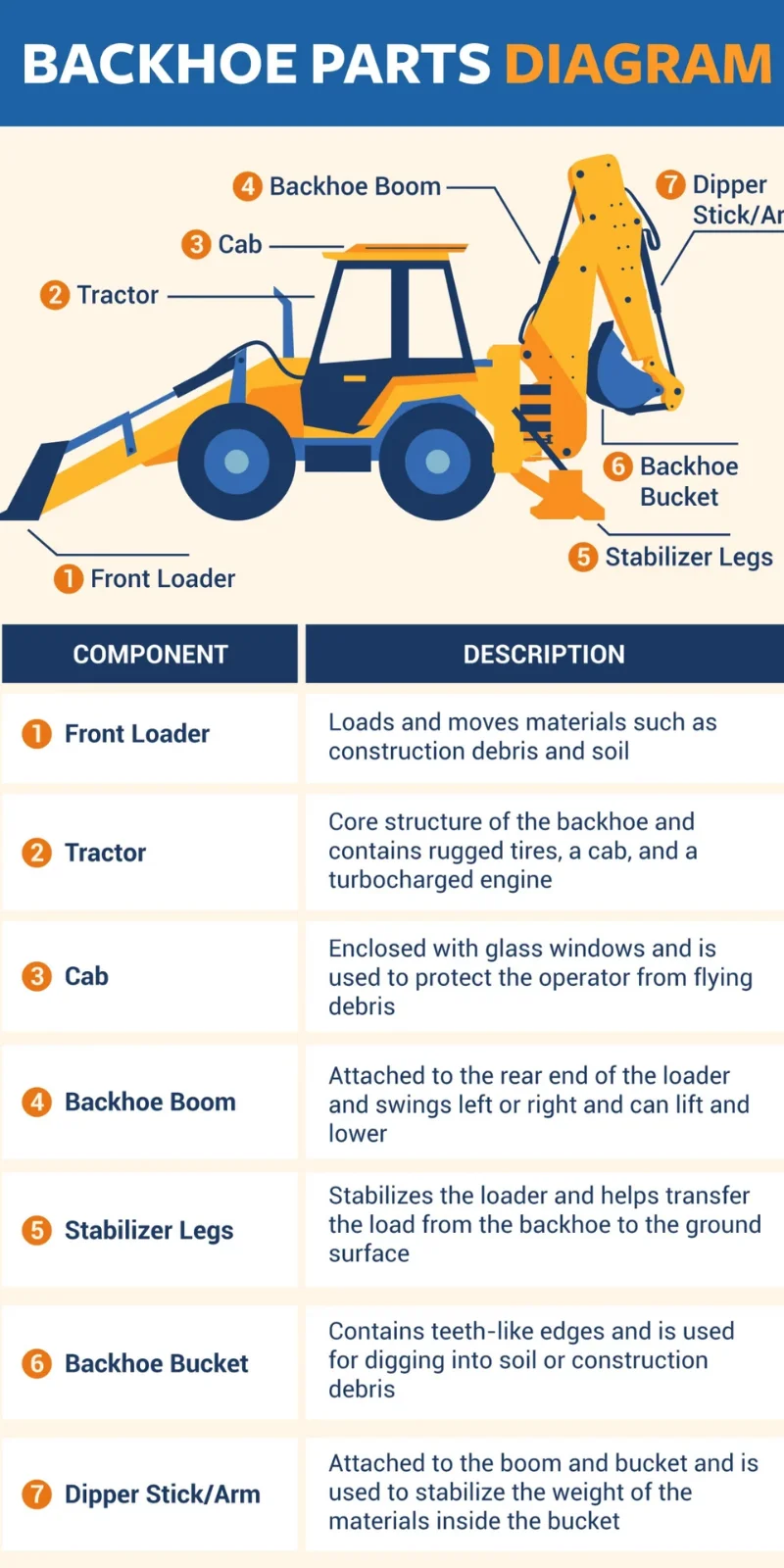
Recognise the three primary sections of a backhoe will help you understand it. The sections were designed to serve specific purposes and house key components that work seamlessly together.
A loader bucket assembly is located on the front of the machine, which can be used to scoop, carry, and dump materials. At the same time, the centre contains the operator cabin, the engine, and the main controls. Last but not least, the rear section houses the backhoe boom, stick, and bucket, which are used for digging and trenching.
Backhoe loaders are primarily composed of these three sections. Although the design varies from manufacturer to manufacturer, the fundamentals remain the same. For a better understanding of why backhoes are such powerful workhorses, let's examine each component individually.
The Front Loader Assembly
Loader Bucket
Located at the front of the backhoe, the loader bucket scoops, carries, and dumps materials. The wide bucket has a capacity between 1.0 and 1.6 cubic yards, making it ideal for moving dirt, gravel, or debris around a construction site. Loader buckets are especially valuable to operators because of their versatility. The bucket is capable of moving materials, grading and leveling surfaces, backfilling trenches, and even clearing light snow during the winter.
Loader Arms
Using loader arms, the bucket is connected to the backhoe's main body. Heavy loads can be lifted with ease using these steel arms, which provide structural support and stability. There are various backhoe sizes available, each equipped with hydraulically powered arms that can lift weights ranging from 5,000 to 8,000 pounds.
Vertical lifting and curling of the bucket are both possible with loader arms. Combining these movements gives operators a great deal of flexibility when handling materials. Additionally, the arms feature quick-attach points, allowing you to easily switch between bucket, pallet fork, and broom attachments.
Hydraulic Cylinders
The loader assembly is powered by hydraulic cylinders, which convert fluid pressure into mechanical force. A loader's lifting and tilting actions are powered by these cylinders. Backhoe loaders are usually equipped with two lift cylinders and one or two tilt cylinders.
During scooping and dumping, the lift and tilt cylinders control the bucket's angle to ensure it is positioned appropriately. Using these components, operators can handle heavy materials with precision and accuracy. A modern hydraulic system also includes pressure-relief valves to prevent overload damage, thereby prolonging a machine's life.
The Center Section
Engine Compartment
Engines provide both movement and hydraulic power to backhoes. A modern backhoe typically features a diesel engine with a horsepower range of 70 to 110. These powerplants are known for their ability to deliver torque necessary for digging in difficult conditions and lifting heavy loads.
There is also a cooling system, an air filter, and an electronic control module installed in the engine compartment. Keeping this section in good working condition is essential for its longevity and optimal performance.
Operator Cabin
Comfortable seats, climate control, and excellent visibility are all features of the cabin. For backhoe functions, joysticks, steering wheels, and foot pedals are typical controls. Operators are protected against hazardous conditions with ROPS and FOPS safety structures installed in modern cabins.
Transmission and Drivetrain
With multiple forward and reverse gears, the transmission transmits engine power to the wheels. Axles and differentials drive all wheels. For optimal fuel economy and performance, some models automatically switch between two and four-wheel drive.
Rear Backhoe Assembly
Boom
Backhoes are attached to frames by curved boom arms that provide 10-15 foot digging reach. Backhoes feature hydraulic cylinders that precisely adjust the position, while some models also have extendable booms, providing extended reach for projects ranging from shallow trenches to deep utility lines.
Stick (Dipper Arm)
It provides additional reach during construction by connecting the boom to the bucket. Depending on its length, you can dig to a greater or lesser depth. It utilizes the boom to position the bucket accurately where necessary, providing a versatile digging system that operates in tight spaces.
Bucket
Using hardened teeth, the rear bucket digs through soil and rocks. The models range in width from 12 to 36 inches and are connected via hydraulic thumbs for grasping objects. EquipmentsFinder contractors use specialized buckets for everything from trenching to tree planting.
Stabilizers
When digging, stabilizers prevent the machine from tipping over. This hydraulically controlled device distributes weight and counterbalances digging forces. Asphalt and concrete surfaces are protected from damage by stabilizer pads, which distribute pressure over a wider area.
Hydraulic System
Hydraulic Pump
Engine power is converted into hydraulic pressure by the pump, which generates 3,000-plus PSI for all moving parts. A modern system utilizes multiple pumps to perform multiple functions simultaneously. By performing routine maintenance, you can prevent costly downtime and ensure the durability of your backhoe.
Hydraulic Lines and Valves
The hoses and valves in this system allow pressurized fluid to flow through the machine. A control valve regulates the flow and pressure to each cylinder. Fluid quality is maintained by filters and coolers. According to EquipmentsFinder data, contaminated fluid is the main cause of hydraulic failures.
What Is a Backhoe Used For?
A backhoe is a great tool for digging trenches for utilities, foundations, and drainage systems. The combination of their loader and excavator makes them perfect for digging and material handling projects. Furthermore, they are used in landscaping, road maintenance, and demolition work.
Maintenance Considerations for Backhoe Parts
Regularly maintaining backhoe components ensures peak performance. Inspections of hydraulic hoses, fluid levels, and bucket wear should be conducted on a daily basis. Checking for these issues prevents minor problems from escalating into major issues.
It is also essential to ensure long-term reliability by scheduling maintenance according to the manufacturer's specifications. Oil should be changed every 250-500 hours, the hydraulic filter should be changed every 500 hours, and the transmission should be serviced every 1,000 hours. A backhoe's effective working life can be doubled with proper maintenance, resulting in significant long-term savings.
Finding Used Backhoe Parts in Dubai & UAE
Repairs can be made more cost-effectively with quality used parts. With EquipmentsFinder, contractors can find used backhoe components like engines, transmissions, switches, and gauges from reliable sources. When compared with new equivalents, these pre-owned parts typically cost 40-60% less.
Conclusion
An operator's ability to understand the machine parts is the key to becoming a skilled professional. Components contribute to the machine's versatility, which helps maximize productivity and minimize costs. To ensure a successful project, EquipmentsFinder provides everything from backhoe rentals to fleet management. Let us know if you need help with your next project.


